
Conflict within a project team is not inherently negative. In fact, it often signals deep engagement and diverse perspectives. However, when left unchecked, interpersonal friction can derail timelines, erode trust, and diminish morale. As a senior team lead, your role extends beyond technical oversight. You are the architect of team dynamics. Navigating conflict requires a blend of emotional intelligence, strategic foresight, and clear procedural frameworks.
This guide outlines a robust approach to handling discord. It focuses on actionable strategies rather than abstract theory. We will explore how to identify the root cause, facilitate productive dialogue, and implement solutions that strengthen the team structure. The goal is not merely to silence disagreement but to harness it for better outcomes.
Understanding the Nature of Conflict in Project Management 🧩
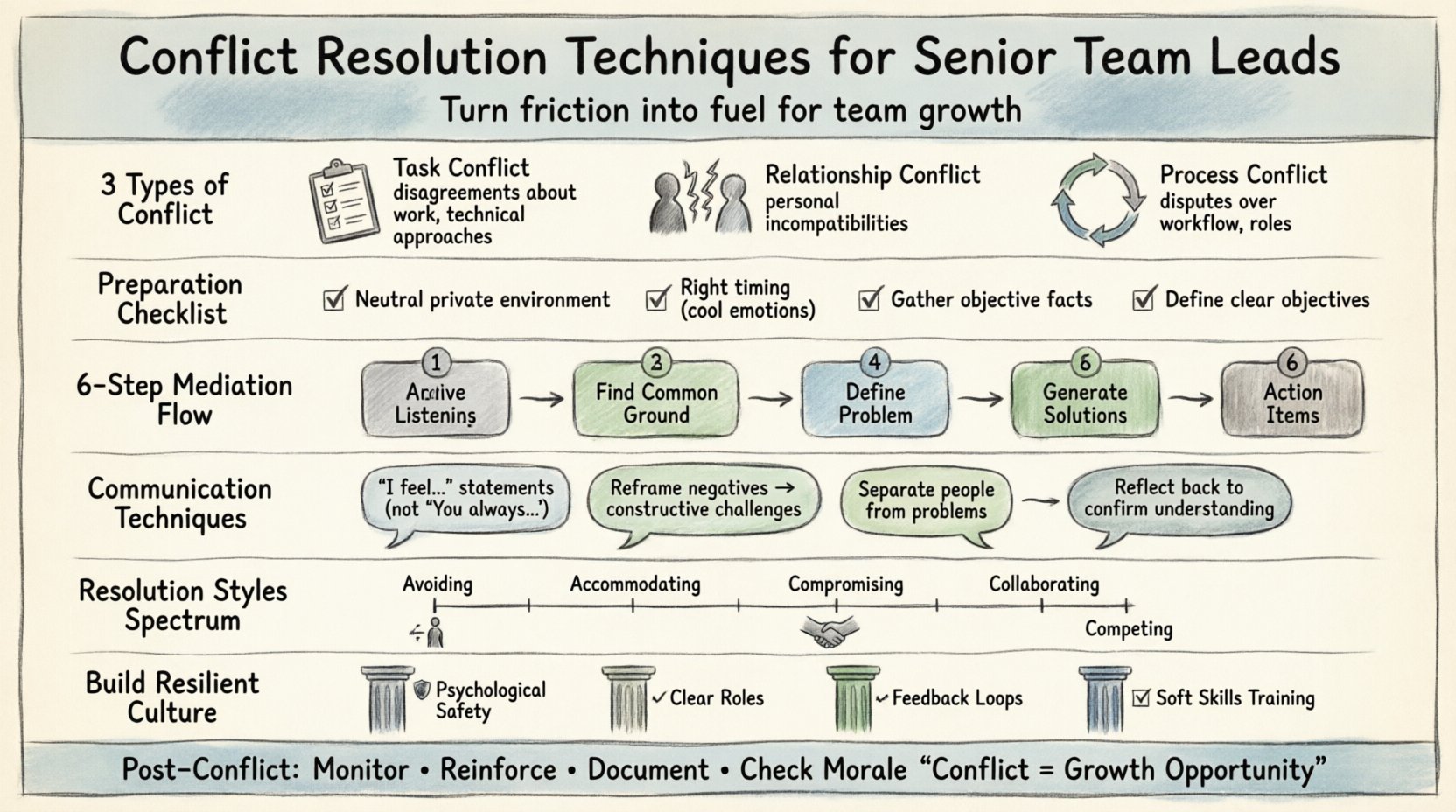
Before intervening, a leader must diagnose the type of conflict present. Not all disputes require the same intervention. In project management, disagreements typically fall into three categories:
Task Conflict: Disagreements regarding the work itself. This includes technical approaches, resource allocation, or interpretation of requirements. While often productive, it can become toxic if it turns personal.
Relationship Conflict: Personal incompatibilities, clashing personalities, or past grievances. This type rarely benefits the project and requires immediate attention.
Process Conflict: Disputes over how work is organized, who does what, or the workflow logistics. These often stem from ambiguity in roles or responsibilities.
Recognizing the category allows you to tailor your response. A task conflict might need a technical review, whereas a relationship conflict requires mediation and psychological safety checks.
Preparation: Setting the Stage for Resolution 📋
Impromptu conflict resolution often fails. It relies on high-stakes emotions and lacks the necessary privacy to be effective. Preparation is the foundation of a successful intervention.
Choose the Right Environment: Ensure the discussion happens in a neutral, private space. Virtual meetings should use private channels. Avoid public forums where individuals might feel defensive.
Manage Timing: Do not address high-intensity conflicts immediately after a stressful event like a missed deadline. Allow emotions to cool, but do not delay so long that resentment solidifies.
Gather Facts: Before the meeting, collect objective data. What happened? When? Who was involved? Avoid hearsay. Facts provide a baseline that reduces speculation.
Define the Objective: Clarify what success looks like for this session. Is it a decision on a technical path? A restoration of working terms? Knowing the goal keeps the conversation focused.
The Mediation Process: Step-by-Step 🗣️
When two or more parties are in conflict, your role is to facilitate, not dictate. The following framework guides the interaction from tension to resolution.
1. Establish Ground Rules
Begin by setting expectations for the conversation. Agree on principles such as:
One person speaks at a time.
No interruptions.
Focus on behaviors and impacts, not character.
Confidentiality regarding what is shared.
2. Active Listening and Validation
Each party must feel heard before they can listen. Ask each individual to state their perspective without rebuttal. As they speak, acknowledge their feelings. Use phrases like, “I understand that you feel frustrated when deadlines shift unexpectedly.” Validation does not mean agreement; it means recognizing the emotion is real.
3. Identify Common Ground
Shift the focus from opposing positions to shared goals. Remind the team that everyone wants the project to succeed. Realigning interests helps move the dynamic from adversarial to collaborative.
4. Define the Problem Clearly
Summarize the core issue in a neutral statement. Ensure all parties agree on what the problem actually is. Often, teams argue about symptoms rather than the disease. For example, the symptom is “missed code reviews,” but the disease might be “unclear expectations on quality standards.”
5. Generate Solutions
Invite the team to propose solutions. Encourage brainstorming without immediate judgment. Once options are on the table, evaluate them against the project constraints and team capacity.
6. Agree on Action Items
Resolution is not complete until there is a clear plan. Assign responsibilities and set deadlines for the agreed-upon solution. Document this agreement to prevent future ambiguity.
Key Communication Techniques for Leaders 💬
Verbal and non-verbal communication dictates the outcome of conflict. Certain techniques help de-escalate tension and foster clarity.
Active Listening
Active listening involves more than hearing words. It requires observing body language and tone. It also means reflecting back what you heard to confirm understanding. If a team member says, “I feel ignored in meetings,” you might respond, “It sounds like you feel your contributions are not being acknowledged during the stand-up. Is that correct?”
Using I-Statements
Encourage team members to use “I” statements rather than “You” statements. “You never send updates” invites defensiveness. “I feel anxious when I do not receive updates by noon” expresses the impact without accusation. This shifts the focus from blame to consequence.
Reframing
Reframing involves restating a negative comment into a constructive challenge. If a developer says, “This requirement is impossible,” reframe it as, “It seems this requirement presents significant technical constraints we need to solve. What do we need to make it feasible?”
Separating People from Problems
Be firm on the issue but soft on the person. Attack the problem, not the individual. This maintains respect while addressing the conflict. It reinforces that the team is united against the obstacle, not against each other.
Conflict Resolution Styles Table 📊
Different situations call for different management styles. No single style works for every scenario. The table below outlines common approaches and their appropriate use cases.
Style | Description | Best Used When | Risk |
|---|---|---|---|
Avoiding | Withdrawing from the conflict or postponing the issue. | When the issue is trivial or emotions are too high to discuss rationally. | Issues fester and grow larger over time. |
Accommodating | Yielding to the other party’s needs over your own. | When preserving the relationship is more important than the specific outcome. | Resentment may build if used repeatedly by one party. |
Competing | Asserting your position to win the conflict. | In emergencies where quick, decisive action is required. | Can damage long-term relationships and team morale. |
Compromising | Seeking a middle ground where both sides give up something. | When goals are moderately important and time is limited. | May result in sub-optimal solutions for both parties. |
Collaborating | Working together to find a win-win solution. | When the issue is complex and requires buy-in from all parties. | Time-consuming and requires high effort from everyone. |
Post-Conflict Management 🔄
The work does not end when the agreement is signed. Post-conflict management ensures that the resolution holds and that the relationship recovers.
Monitor Progress: Check in on the agreed actions. Are the new processes being followed? Is the friction gone?
Reinforce Positive Behavior: Acknowledge when team members handle challenges well. Positive reinforcement encourages continued cooperation.
Document the Resolution: Keep a record of the conflict and the outcome. This is vital for future reference if the issue resurfaces.
Check on Morale: Conflict leaves emotional residue. Ensure team members are not carrying baggage into future tasks.
Building a Resilient Team Culture 🌱
The most effective conflict resolution is prevention. A culture that encourages open dialogue reduces the likelihood of toxic conflict.
Psychological Safety
Team members must feel safe to express disagreement without fear of retribution. Leaders set this tone by admitting their own mistakes and inviting critique. When people feel safe, they address issues early before they become conflicts.
Clear Roles and Responsibilities
Many conflicts arise from ambiguity. Ensure every team member understands their scope of work. Use tools like RACI matrices to clarify who is Responsible, Accountable, Consulted, and Informed for each task. Clarity reduces friction.
Regular Feedback Loops
Do not wait for a crisis to discuss performance. Implement regular one-on-ones and retrospectives. These forums allow for small issues to be aired and resolved before they escalate.
Training and Development
Invest in soft skills training. Workshops on communication, negotiation, and emotional intelligence equip the team with the tools to handle disputes independently.
Handling Difficult Personalities 🔒
Sometimes, conflict stems from specific behavioral patterns. Recognizing these patterns helps you manage them effectively.
The Aggressor: Someone who dominates conversations. Limit their speaking time. Ask direct questions to others to rebalance the dynamic.
The Passive-Aggressive: Someone who expresses negativity indirectly. Address the behavior directly. “I noticed you were quiet during that decision. What is your concern?”
The Validator: Someone who constantly seeks approval. Give clear feedback. Do not leave them guessing where they stand.
Cultural and Contextual Nuances 🌍
Global teams introduce cultural dimensions to conflict. In some cultures, direct disagreement is seen as rude. In others, it is expected. Senior team leads must be culturally aware.
High-Context vs. Low-Context: In high-context cultures, meaning is often implied. In low-context cultures, meaning is explicit. Adjust your communication style to match the audience.
Power Distance: In some environments, junior members will not challenge senior members openly. You may need to create private channels for feedback.
Time Perception: Views on deadlines and urgency vary. Align expectations early to prevent process conflicts.
Legal and Ethical Considerations ⚖️
While most conflicts are interpersonal, some cross into legal or ethical territory. Harassment, discrimination, and safety violations are not subject to standard mediation.
Zero Tolerance: Behaviors that violate company policy or the law must be reported to HR or legal immediately.
Documentation: Keep detailed records of all incidents. This protects the organization and the individuals involved.
Impartiality: If you are involved in the conflict, step aside. Seek a neutral third party to handle the resolution.
Final Thoughts on Leadership and Friction 🏁
Conflict is a natural byproduct of human interaction within high-stakes environments. It is not a sign of failure. It is a sign of change and growth. The senior team lead who navigates conflict with clarity and empathy builds a stronger, more resilient organization.
By understanding the types of conflict, preparing thoroughly, and applying structured communication techniques, you can turn friction into fuel. Remember that the objective is not to eliminate disagreement but to manage it constructively. A team that learns to resolve conflict effectively is a team that can withstand any challenge.
Focus on the process, maintain respect, and keep the project goals in sight. This approach ensures that when the dust settles, the team is more united than before.