
Complex projects involve numerous moving parts, interdependent tasks, and diverse groups of people. Among the most critical factors determining success or failure is how well project leaders manage the individuals and groups who influence or are influenced by the project. Stakeholder management is not merely about keeping people informed; it is about building relationships, aligning expectations, and navigating political landscapes to ensure the project delivers value. This guide outlines practical, authoritative strategies for handling stakeholders in high-stakes environments without relying on specific tools or hype.
Understanding the Scope of Stakeholder Management 📊
In the context of complex initiatives, stakeholders extend beyond the project team. They include clients, sponsors, regulatory bodies, end-users, suppliers, and internal departments. Each group holds different levels of power, interest, and urgency regarding the outcome. Failing to engage them appropriately can lead to scope creep, resistance, budget overruns, or complete project cancellation.
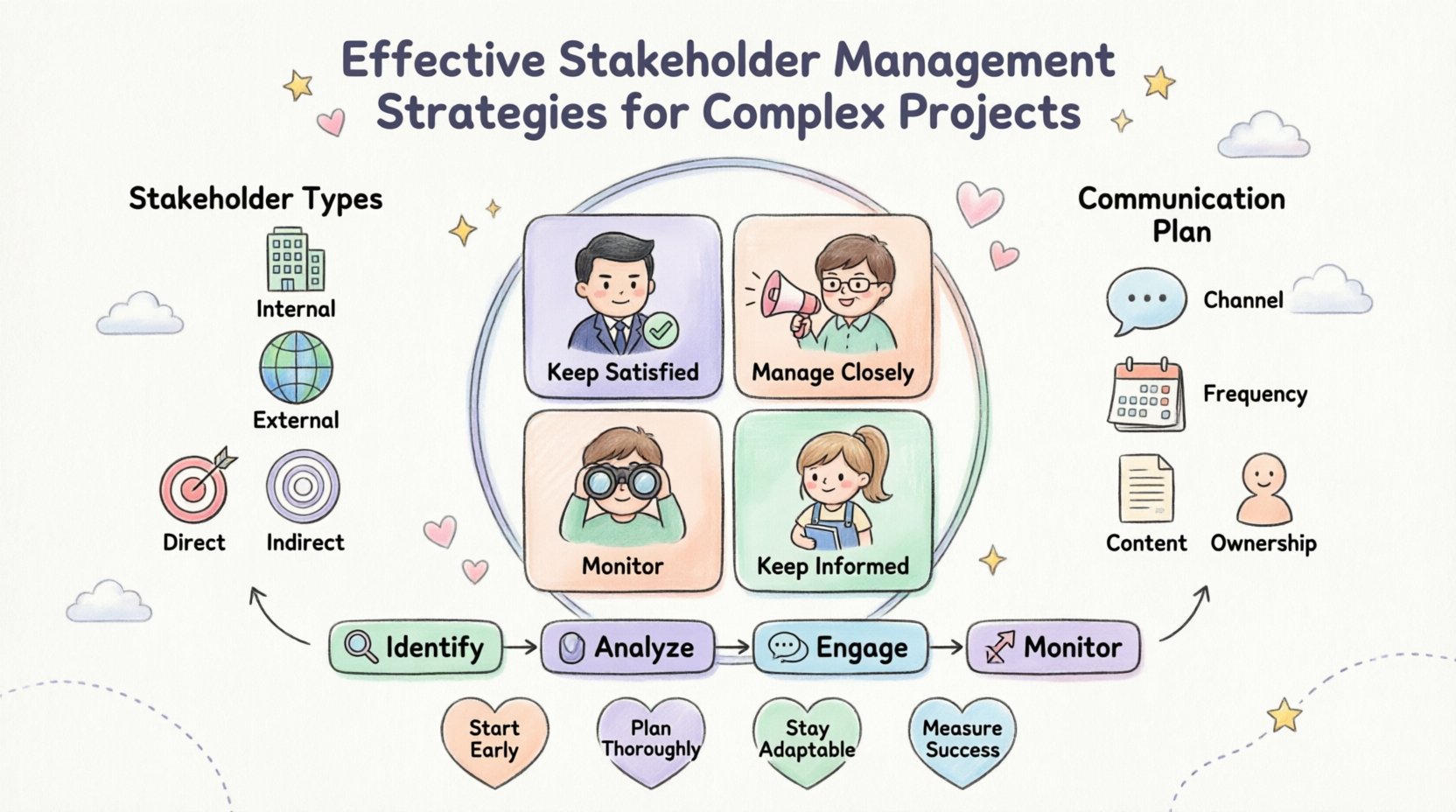
Effective management requires a structured approach. It begins with identification and moves through analysis, planning, engagement, and monitoring. The goal is to transform potential obstacles into active supporters.
- Identification: Knowing who holds influence.
- Analysis: Understanding their motivations and needs.
- Engagement: Tailoring communication to their style.
- Monitoring: Tracking changes in their attitude or power.
Identifying and Mapping Stakeholders 🗺️
The first step is to cast a wide net. Do not assume you know all the key players. Conduct interviews, review organizational charts, and examine past project records. A comprehensive list ensures no critical voice is missed.
Categorizing by Role
Stakeholders can be categorized into several distinct groups based on their relationship to the work:
- Internal Stakeholders: Employees, management teams, and department heads within the organization.
- External Stakeholders: Customers, vendors, government agencies, and community groups.
- Direct Stakeholders: Those directly affected by the project output.
- Indirect Stakeholders: Those affected by the environment or industry changes resulting from the project.
The Power-Interest Matrix
Once identified, stakeholders should be mapped to prioritize engagement. A common method involves plotting them on a grid based on their Power (ability to influence) and Interest (level of concern).
| Category | Characteristics | Strategy |
|---|---|---|
| High Power, High Interest | Key decision-makers who care deeply about results. | Manage Closely |
| High Power, Low Interest | Executives who need assurance but not details. | Keep Satisfied |
| Low Power, High Interest | End-users or technical staff who care about functionality. | Keep Informed |
| Low Power, Low Interest | Groups with minimal impact or concern. | Monitor |
This matrix helps allocate time and resources efficiently. You do not need to hold daily meetings with everyone. Focus energy where it matters most.
Developing a Communication Plan 📢
Communication is the lifeline of stakeholder management. A generic approach rarely works. Different stakeholders prefer different formats, frequencies, and depths of information. A robust plan defines these parameters clearly.
Key Components of the Plan
- Channel Selection: Determine the medium. Some prefer formal reports, while others want brief updates. Options include emails, meetings, dashboards, or written documents.
- Frequency: Define how often updates occur. Weekly, bi-weekly, or monthly. Consistency builds trust.
- Content: Decide what information is shared. Avoid overwhelming recipients with data they do not need. Focus on risks, progress, and decisions required.
- Ownership: Assign a team member responsible for distributing each communication type.
Tailoring the Message
Technical teams often require granular data regarding timelines and resource allocation. Executive sponsors, however, typically need high-level summaries focusing on budget, strategic alignment, and major milestones. Adapting the message prevents confusion and demonstrates respect for the stakeholder’s time.
Managing Expectations and Scope 📏
One of the most common causes of project failure is unmanaged expectations. Stakeholders often assume the final deliverable will look exactly as described in the initial pitch, without accounting for constraints like budget or technical limitations.
Setting Realistic Baselines
Establish clear baselines early. Document what is in scope and, equally importantly, what is out of scope. Use visual aids like roadmaps or Gantt charts to illustrate timelines. This provides a reference point for future discussions.
Handling Change Requests
Changes are inevitable in complex projects. However, they must be processed through a formal change control process. This ensures that any addition to scope is weighed against its impact on time and cost.
- Impact Analysis: Evaluate how a request affects the schedule, budget, and resources.
- Approval Workflow: Require sign-off from the appropriate authority before implementation.
- Documentation: Record all changes in a central log to maintain an audit trail.
By enforcing this discipline, you protect the project from “gold plating” and scope creep while ensuring stakeholders understand the trade-offs involved.
Engaging and Building Relationships 🤝
Technical competence alone does not guarantee success. Emotional intelligence and relationship building play a pivotal role. Stakeholders are people, and people respond to trust and respect.
Active Listening
Listen more than you speak. Understand the underlying concerns behind the requests. A stakeholder asking for a specific feature might actually be worried about a regulatory compliance issue. Addressing the root concern builds stronger alignment.
Regular Check-ins
Schedule recurring touchpoints that are not solely focused on status reporting. Use these moments to discuss challenges, gather feedback, and reinforce the shared vision. Informal interactions can be just as valuable as formal meetings.
Transparency
Bad news travels faster than good news. If a risk materializes or a milestone is missed, communicate it immediately. Hiding problems erodes trust. Provide context and propose solutions when delivering negative updates.
Navigating Conflicts and Resistance 🛡️
Conflict is natural when multiple parties with competing interests collaborate. Some stakeholders may resist the project due to fear of change, resource competition, or lack of understanding. The goal is not to eliminate conflict but to manage it constructively.
Identifying the Source
Determine why resistance exists. Is it due to a lack of information, perceived threat to authority, or misaligned incentives? The solution depends on the root cause.
Resolution Strategies
- Collaboration: Work together to find a win-win solution. This is ideal when time permits.
- Compromise: Both parties give up something to reach an agreement. Useful when interests are conflicting but not mutually exclusive.
- Accommodation: One party yields to the other. Useful when maintaining the relationship is more important than the specific issue.
- Forcing: Using authority to impose a decision. This should be a last resort as it can damage long-term relationships.
Monitoring Engagement and Feedback 🔄
Stakeholder engagement is not static. Power dynamics shift, personnel change, and priorities evolve. Continuous monitoring ensures the management strategy remains effective throughout the project lifecycle.
Feedback Loops
Establish mechanisms for stakeholders to provide feedback on the project process itself. Surveys, retrospectives, and open forums can reveal gaps in communication or satisfaction levels. Act on this feedback to improve the working relationship.
Re-evaluating the Matrix
Periodically update the Power-Interest Matrix. A stakeholder who was low priority at the start may become critical later. New stakeholders may emerge. Adjusting the engagement plan accordingly prevents surprises.
Conclusion and Next Steps 🚀
Managing stakeholders in complex projects requires a blend of strategic planning, clear communication, and interpersonal skill. It is a continuous process that demands attention and adaptation. By identifying the right people, analyzing their influence, and tailoring your approach, you can navigate the complexities of large-scale initiatives.
Focus on building trust through transparency and consistency. Respect the time and perspectives of those involved. When stakeholders feel heard and valued, they become partners in success rather than obstacles. Implement these strategies to enhance project outcomes and foster a culture of collaboration.
- Start Early: Identify stakeholders during the initiation phase.
- Plan Thoroughly: Create a detailed communication and engagement plan.
- Stay Adaptable: Be ready to adjust strategies as the project evolves.
- Measure Success: Track engagement levels and satisfaction throughout.
With a disciplined approach, complex projects can deliver value while maintaining strong relationships across the organization. The investment in stakeholder management pays dividends in reduced risk and smoother execution.