
In the complex landscape of project management, delivering value is not merely about meeting deadlines or staying within budget. It is fundamentally about the integrity of the final deliverable. Quality control acts as the safeguard that ensures every component of a project adheres to defined standards and expectations. Unlike quality assurance, which focuses on the processes, quality control focuses on the output. This distinction is critical for teams aiming to reduce rework and maintain stakeholder confidence.
When an organization integrates robust quality control mechanisms, it shifts from a reactive stance to a proactive one. Issues are identified before they escalate into costly failures. This approach requires a deep understanding of the project lifecycle, as the nature of quality checks evolves from initiation to closure. The following guide details how to maintain rigorous standards at every stage.
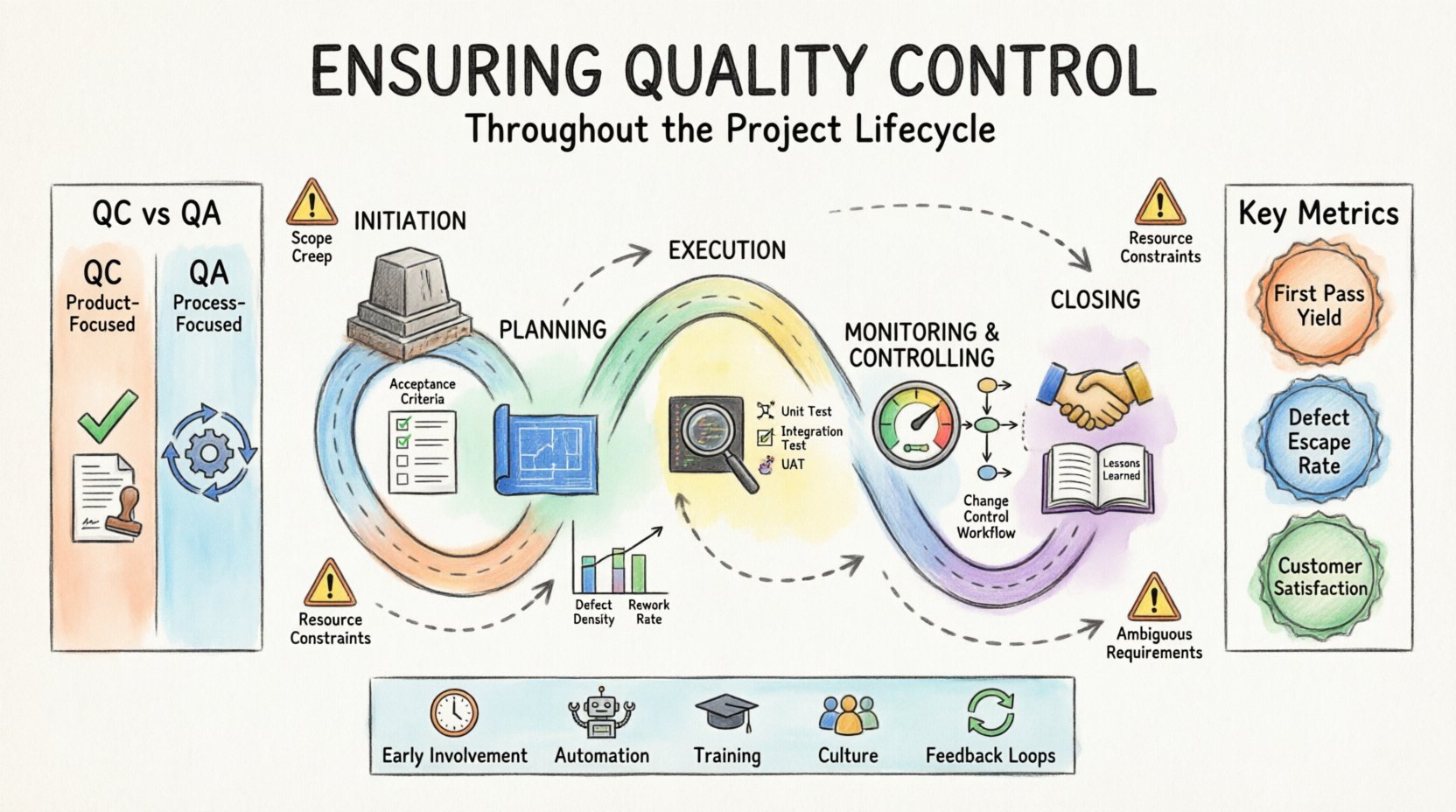
📋 Understanding Quality Control in Project Management
Before diving into the lifecycle phases, it is essential to clarify what quality control entails in this context. It involves monitoring and recording results of quality activities to assess performance and recommend necessary changes. It is a verification process.
- Identification: Spotting defects or non-conformities.
- Measurement: Comparing actual results against planned standards.
- Correction: Taking action to fix identified issues.
Without a structured approach, quality control becomes ad-hoc, leading to inconsistent results. A systematic method ensures that every deliverable is scrutinized based on pre-agreed criteria. This consistency builds trust with clients and internal stakeholders alike.
🔨 Phase 1: Initiation – Setting the Foundation
Quality control begins long before the first task is assigned. During the initiation phase, the groundwork for quality is laid. If the requirements are vague or unrealistic, quality control later in the cycle will struggle to find a baseline for comparison.
Defining Acceptance Criteria
Every project must have clear acceptance criteria. These are specific conditions that must be met for the deliverables to be accepted by the stakeholders. Vague terms like “high quality” are insufficient. Instead, criteria should be measurable and specific.
- Functional Requirements: What must the product do?
- Non-Functional Requirements: How should the product perform (speed, reliability, security)?
- Constraints: What are the limits regarding budget, time, or resources?
Stakeholder Alignment
Ensuring all parties agree on what “quality” looks like prevents disputes later. Misalignment here often leads to scope creep and rework. Regular early engagement helps clarify expectations.
📏 Phase 2: Planning – Defining Standards and Metrics
Once the project is approved, the planning phase dictates how quality will be managed. This is where the quality management plan is developed. It outlines the standards, tools, and processes that will be used to measure quality.
Establishing Quality Metrics
Metrics provide the data needed to track performance. Without data, quality is subjective. Common metrics include defect density, pass rates, and turnaround time.
- Defect Density: Number of defects per unit of size.
- Rework Rate: Percentage of work that requires correction.
- Compliance Rate: Adherence to regulatory or internal standards.
Process Design
The plan must define the workflows for quality checks. Who performs the review? When does it happen? What is the escalation path if a critical issue is found? Defining these workflows ensures accountability.
🔍 Phase 3: Execution – Implementation and Testing
Execution is where the plan meets reality. This phase involves the actual creation of deliverables and the simultaneous application of quality control activities. It is the most active period for identifying defects.
Conducting Reviews and Audits
Regular reviews are essential to catch issues early. These can take many forms, including peer reviews, code inspections, or design walkthroughs. The goal is to find errors before the work moves to the next stage.
- Peer Reviews: Team members check each other’s work.
- Design Walkthroughs: Visualizing the output before finalizing.
- Inspection Audits: Formal checks against compliance standards.
Testing Protocols
Testing validates that the product works as intended. It should be structured and repeatable. Test cases should cover normal usage, edge cases, and potential failure points.
- Unit Testing: Checking individual components.
- Integration Testing: Checking how components work together.
- User Acceptance Testing: Verifying the product meets user needs.
📊 Phase 4: Monitoring and Controlling – Tracking Performance
During execution, monitoring and controlling ensures the project stays on track regarding quality. This phase involves comparing actual performance against the quality management plan.
Quality Control Measurements
Continuous measurement allows for timely interventions. If defect rates rise, immediate action is required. This might involve pausing work to address root causes.
Change Control
Changes are inevitable in projects. However, uncontrolled changes can degrade quality. A change control process ensures that every modification is evaluated for its impact on quality before approval.
- Impact Analysis: Assessing how a change affects other parts of the project.
- Approval Workflow: Formal sign-off from relevant stakeholders.
- Documentation: Recording all changes for future reference.
Vendor Management
If external parties are involved, their output must be held to the same standards. Vendor quality control involves auditing their processes and inspecting their deliverables before integration.
🏁 Phase 5: Closing – Validation and Handover
The final phase involves validating that all quality requirements have been met before the project is formally closed. This ensures no outstanding defects are passed to the operations team.
Final Acceptance
Stakeholders must formally accept the deliverables. This is not a formality but a verification step. All acceptance criteria must be signed off.
Lessons Learned
Reflecting on the quality process helps improve future projects. What worked well? Where did defects originate? Documenting these insights creates a knowledge base for the organization.
Handover Procedures
Quality control extends beyond the project team. Proper handover ensures the operations team can maintain the quality of the deliverable. Documentation and training are key components here.
⚠️ Common Quality Challenges and Solutions
Despite best efforts, challenges arise. Recognizing common pitfalls allows teams to navigate them effectively.
| Challenge | Root Cause | Solution |
|---|---|---|
| Scope Creep | Uncontrolled changes | Strict change control process |
| Resource Constraints | Overloaded team | Realistic scheduling and prioritization |
| Ambiguous Requirements | Poor communication | Clear definition of terms and criteria |
| Low Morale | Burnout from rework | Focus on prevention rather than detection |
🌱 Best Practices for Sustainable Quality
To maintain high standards without burning out the team, certain practices should be adopted consistently.
- Early Involvement: Involve quality personnel from the start.
- Automation: Where possible, automate repetitive checks to save time.
- Training: Ensure all team members understand quality standards.
- Culture: Foster a culture where quality is everyone’s responsibility, not just a specific role.
- Feedback Loops: Create channels for continuous feedback from users and stakeholders.
🔄 Quality Control vs. Quality Assurance
While related, these concepts are distinct. Confusing them can lead to gaps in the management process.
- Quality Assurance (QA): Process-oriented. It focuses on preventing defects by improving the process.
- Quality Control (QC): Product-oriented. It focuses on identifying defects in the final product.
A robust project management strategy requires both. QA ensures the right processes are in place, while QC ensures those processes produce the right results.
📈 Measuring Success
How do you know the quality control strategy is working? Success is measured by the reduction of defects over time and the increase in stakeholder satisfaction. Key performance indicators should be reviewed regularly.
- First Pass Yield: Percentage of work completed without rework.
- Customer Satisfaction Score: Feedback from the end users.
- Defect Escape Rate: Number of defects found after delivery.
Tracking these metrics provides a clear picture of project health. If metrics trend negatively, the quality management plan needs adjustment.
🛠️ The Role of Leadership
Leadership plays a pivotal role in quality. They set the tone and allocate resources. If leadership prioritizes speed over quality, the team will follow suit. Conversely, when leaders emphasize quality, the team invests the necessary effort.
- Resource Allocation: Ensure time is budgeted for testing and review.
- Support: Back the team when they identify critical issues.
- Accountability: Hold everyone responsible for maintaining standards.
📝 Summary of Lifecycle Integration
Integrating quality control into every phase creates a seamless flow. It prevents the accumulation of technical debt and ensures the final product is reliable. Below is a summary of actions required at each stage.
- Initiation: Define acceptance criteria and requirements.
- Planning: Develop the quality management plan and metrics.
- Execution: Perform reviews, inspections, and testing.
- Monitoring: Track metrics and manage changes.
- Closing: Validate deliverables and document lessons learned.
By adhering to this structured approach, organizations can ensure that quality is not an afterthought but a core component of project delivery. The effort invested in quality control pays dividends in reduced costs, higher satisfaction, and long-term stability.
🚀 Final Thoughts on Quality
Maintaining quality throughout the project lifecycle is a discipline. It requires vigilance, clear communication, and a commitment to standards. When teams adopt this mindset, they deliver value that stands the test of time. The goal is not just to finish the project, but to finish it right.
Remember that quality is a journey, not a destination. Continuous improvement should be the constant companion of every project manager. By focusing on prevention and systematic verification, projects can achieve excellence consistently.