
In modern project management, influence often matters more than title. You may lead a cross-functional initiative, yet lack direct reporting lines over the people whose time and resources you need. This scenario creates a fundamental challenge: how do you secure commitment without issuing commands?
This guide explores practical, evidence-based strategies for gaining project buy-in without authority. We will move beyond theory into actionable steps that build trust, align interests, and foster collaboration. Whether you are managing a complex software rollout or a marketing campaign, these techniques help you navigate organizational dynamics effectively.
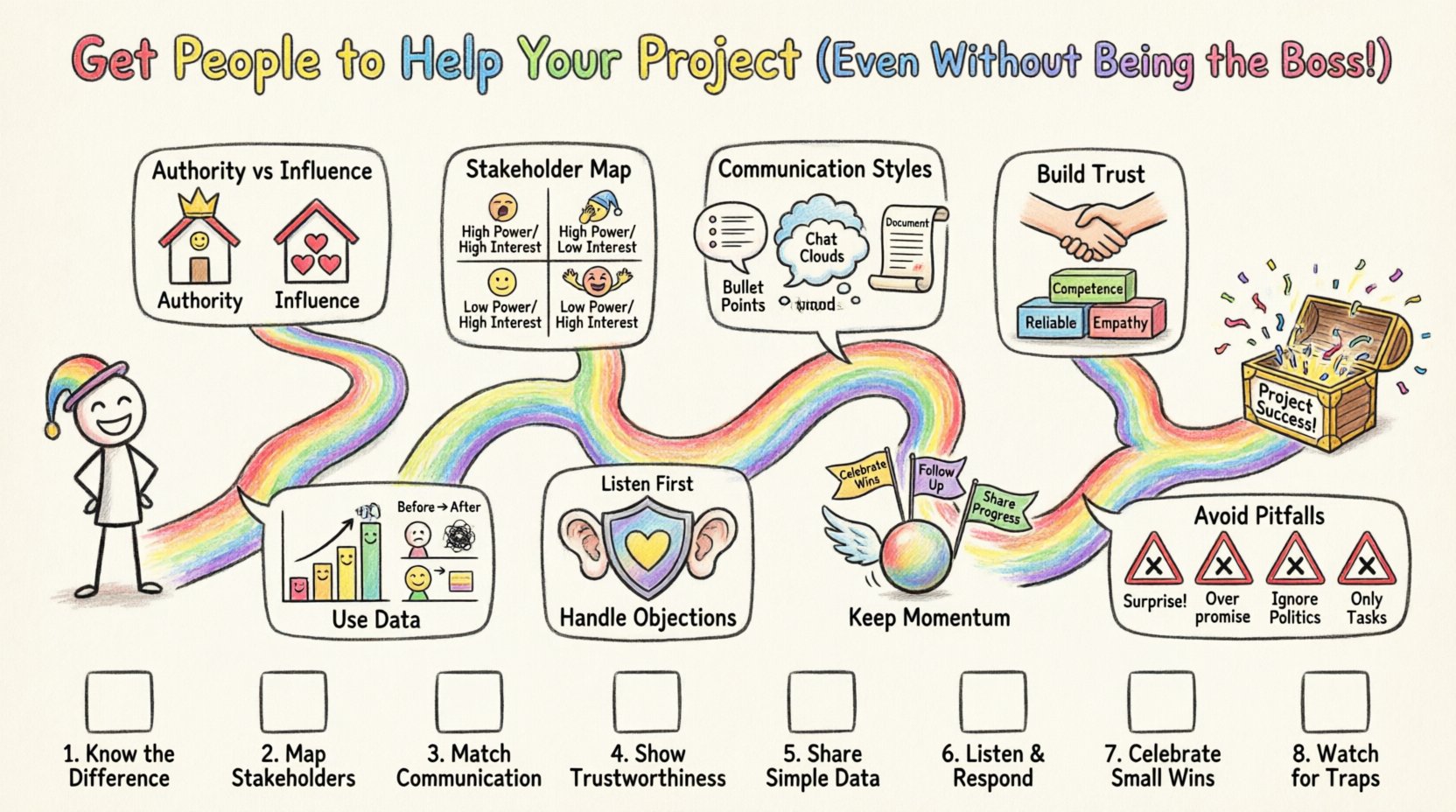
🧩 Understanding the Influence Gap
The gap between authority and influence is where most projects stall. Authority comes from a position on an org chart. Influence comes from relationships, credibility, and perceived value. When you lack authority, you cannot demand results. You must persuade stakeholders to volunteer their efforts.
Why does this matter? Projects require resources. Resources require time. Time is a finite commodity. If stakeholders do not see value in your project, they will prioritize other work. Your goal is to make your project a priority in their minds.
Key differences between authority and influence include:
Source of Power: Authority is granted by the organization. Influence is granted by peers and stakeholders.
Duration: Authority is static. Influence fluctuates based on performance and trust.
Compliance vs. Commitment: Authority often yields compliance (doing what is told). Influence yields commitment (doing what is needed).
Relationship Dynamics: Authority creates hierarchy. Influence creates partnership.
To succeed, you must shift your mindset from managing tasks to managing relationships. This requires patience and a deep understanding of human psychology within the workplace.
🗺️ Mapping Stakeholders for Maximum Impact
Before you ask for anything, you must understand who holds the keys. Not all stakeholders are created equal. Some have the power to block your work; others have the power to champion it. Identifying these roles early prevents wasted effort.
Use a matrix to categorize stakeholders based on two dimensions: Power (ability to influence the project) and Interest (how much they care about the outcome).
Stakeholder Type | Characteristics | Engagement Strategy |
|---|---|---|
High Power, High Interest | Key decision-makers or sponsors. | Manage Closely: Engage frequently. Ensure their needs are met. Keep them informed of all major milestones. |
High Power, Low Interest | Senior leaders or compliance officers. | Keep Satisfied: Do not overwhelm them with details. Provide high-level updates. Ensure no roadblocks exist. |
Low Power, High Interest | End-users or team members executing tasks. | Keep Informed: They care about the details. Involve them in design. Use them to advocate for you. |
Low Power, Low Interest | Peripheral departments. | Monitor: Minimal effort required. Check in periodically to ensure they remain disengaged from issues. |
Once mapped, prioritize your energy. Do not spend equal time on everyone. Focus on the High Power, High Interest group first. They can make or break the project.
🗣️ Communication Adaptation Strategies
One size does not fit all. A technical lead needs different information than a finance director. Adapting your communication style is crucial for persuasion.
1. Identify Communication Preferences
Observe how others communicate. Do they prefer:
Direct and Brief: Bullet points, clear asks, no fluff.
Collaborative and Discursive: Meetings, brainstorming, back-and-forth.
Written Documentation: Emails, memos, detailed specs.
2. Tailor the Message
Match the stakeholder’s priority language:
For Finance: Focus on ROI, cost savings, and risk mitigation.
For Operations: Focus on efficiency, timelines, and workflow impact.
For Engineering: Focus on technical feasibility, scalability, and architecture.
For Marketing: Focus on brand impact, customer experience, and speed to market.
3. Timing Matters
Present your ideas when stakeholders are receptive. Avoid asking for resources during budget cuts or peak stress periods. Schedule dedicated time for discussion rather than dropping requests into busy calendars.
🤝 Building Trust Before the Ask
Trust is the currency of influence. You cannot borrow it indefinitely. You must build it over time. This means delivering on small promises before asking for big commitments.
1. Demonstrate Competence
People trust experts. Show that you understand the domain. When you speak, be precise. If you do not know an answer, admit it and promise to find out. Bluffing destroys credibility instantly.
2. Be Reliable
If you say you will send a document by 5 PM, send it by 5 PM. Consistency builds a reputation for reliability. This reduces the perceived risk for stakeholders who agree to support you.
3. Show Empathy
Understand the pressures your stakeholders face. Acknowledge their constraints. When you validate their struggles, they are more likely to reciprocate with support.
Bad: “I need this data by Friday for the report.”
Good: “I know your team is swamped this week. Is it possible to get a summary of the data by Friday, or should we push the deadline?”
This approach shows you respect their time and workload.
📊 Data-Driven Persuasion
Opinions are subjective; data is objective. While you need to appeal to emotions to gain support, you need data to justify the decision. Facts reduce ambiguity and protect stakeholders from risk.
1. Quantify the Problem
Don’t just say the process is slow. Say it costs $5,000 per month in wasted hours. Use metrics to define the current pain.
2. Present the Solution Clearly
Show the projected improvement. Use before-and-after scenarios. Visuals like charts or flow diagrams help stakeholders grasp the change quickly.
3. Acknowledge Risks
Be honest about potential downsides. If you present a perfect picture, skeptical stakeholders will find the flaws. Addressing risks upfront shows you have done your homework.
Risk: Integration with legacy systems may delay timeline by two weeks.
Mitigation: We have allocated buffer time and identified a technical lead to handle the transition.
This transparency builds confidence in your planning.
🛡️ Handling Objections and Resistance
Resistance is normal. It means stakeholders are thinking critically. Do not view pushback as a personal attack. View it as information.
1. Listen Actively
Let them finish their thought. Interrupting signals that you care more about winning than understanding. Paraphrase their objection to ensure clarity.
2. Validate and Pivot
Start with agreement. “I understand why that is a concern.” Then, pivot to your solution. “Here is how we can address that constraint while still achieving the goal.”
3. Find Common Ground
Revisit shared goals. “We both want to reduce customer churn. This project is designed to do exactly that.”
4. Escalate Strategically
If a stakeholder blocks progress without valid reason, do not fight them directly. Bring the issue to your sponsor. Frame it as a risk to the project, not a conflict with the person.
🔄 Sustaining Momentum Over Time
Getting buy-in is the start, not the finish. Momentum fades if you stop communicating. Maintain engagement throughout the lifecycle.
Regular Updates: Send status reports that highlight wins and milestones.
Celebrate Small Wins: Publicly acknowledge contributions. This reinforces positive behavior.
Feedback Loops: Ask stakeholders for input on upcoming phases. This keeps them invested in the outcome.
Post-Project Review: Share results. Show them the impact of their support. This builds goodwill for future projects.
⚠️ Common Pitfalls to Avoid
Even experienced project managers make mistakes when navigating influence dynamics. Watch out for these traps.
Pitfall | Why It Fails | Correct Approach |
|---|---|---|
Surprise Requests | Stakeholders feel blindsided and defensive. | Preview Early: Share ideas informally before formal requests. |
Overpromising | Breaks trust when deadlines slip. | Under-promise: Build in buffers. Deliver early or on time. |
Ignoring Politics | Overlooking informal power structures. | Map Influence: Understand who really decides, not just who is on the org chart. |
Focusing Only on Tasks | Forgets the human element. | Focus on People: Prioritize relationships alongside deliverables. |
📝 Final Checklist for Implementation
Before launching your next initiative, run through this checklist to ensure you are prepared to gain support.
☑️ Have I identified all key stakeholders and their influence levels?
☑️ Do I understand their personal and professional goals?
☑️ Have I tailored my message to their specific interests?
☑️ Do I have data to back up my problem statement?
☑️ Have I built a relationship with key decision-makers before asking for resources?
☑️ Am I prepared to handle objections with empathy and logic?
☑️ Do I have a plan for ongoing communication and updates?
☑️ Have I defined what success looks like for each stakeholder?
🏁 Moving Forward
Gaining buy-in without authority is a skill that develops over time. It requires a blend of emotional intelligence, strategic planning, and persistence. You cannot force cooperation, but you can create an environment where cooperation is the natural choice.
Start by focusing on one relationship this week. Listen more than you speak. Deliver on a small promise. These small actions compound into significant influence. Remember, your title does not define your impact. Your ability to connect and persuade does.
Apply these techniques consistently. Adapt them to your organizational culture. Over time, you will find that the need for formal authority diminishes as your reputation for effectiveness grows. This is the path to sustainable project leadership.