
The first project kickoff meeting sets the tone for the entire lifecycle of your initiative. It is the moment where abstract ideas transform into concrete plans, and team members transition from individuals to a cohesive unit. For many project managers, this is a high-pressure event. However, with the right preparation and structure, you can lead this meeting with authority and clarity.
This guide provides a comprehensive approach to conducting a successful kickoff. We will cover preparation, agenda structure, communication strategies, and follow-up procedures. The goal is to align everyone on objectives, roles, and expectations without relying on hype or generic advice.
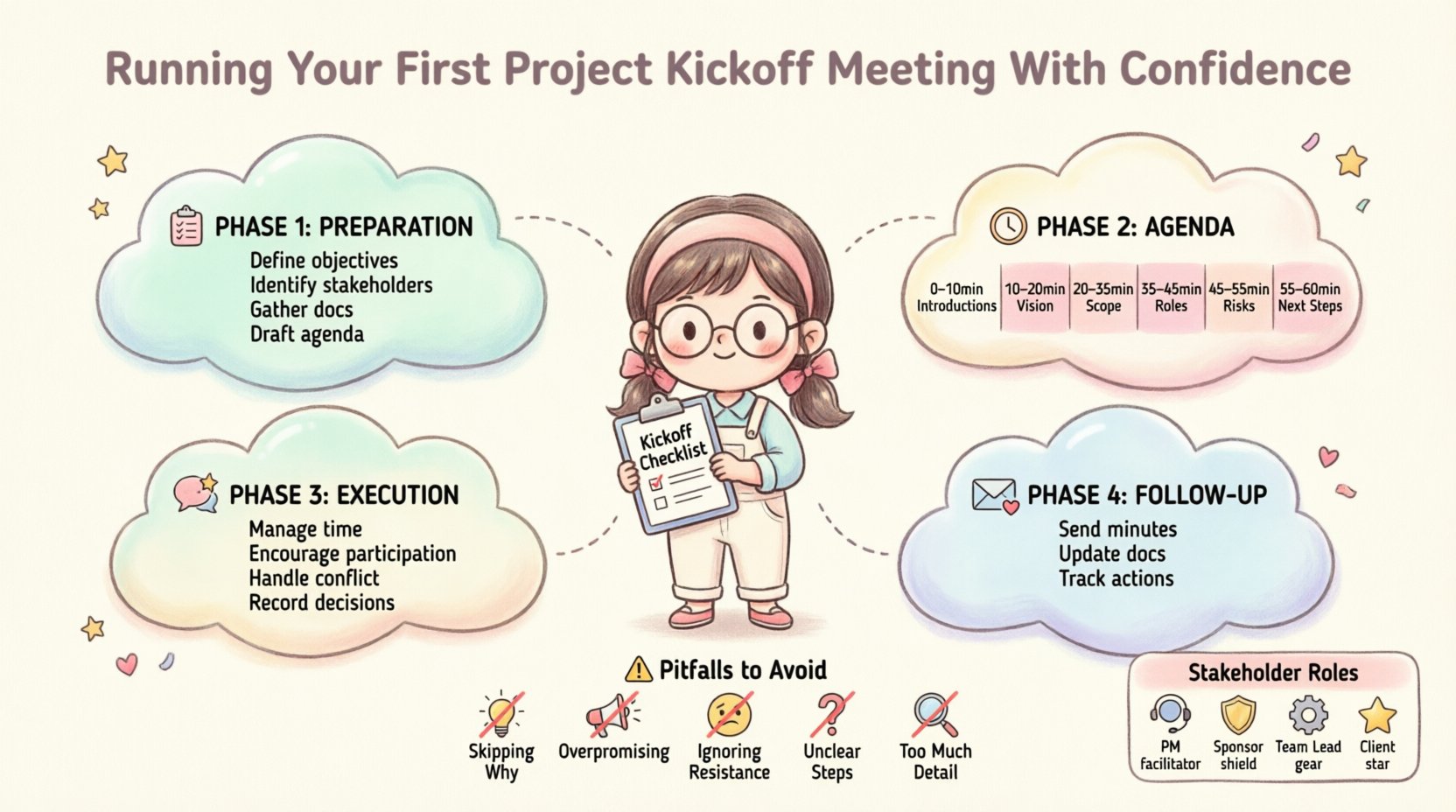
🎯 Why the Kickoff Matters
A kickoff meeting is not merely a formality. It is the foundational event where the project charter is reviewed, and the culture for collaboration is established. Research in project management indicates that projects with clear, shared goals at the start are significantly less likely to experience scope creep or timeline delays.
When you run this meeting effectively, you achieve several critical outcomes:
- Alignment: Everyone understands the “why” behind the work.
- Expectation Setting: Stakeholders know how decisions will be made and who is responsible for what.
- Risk Identification: Potential roadblocks are surfaced early, allowing for proactive planning.
- Morale Boost: A well-run meeting signals competence and organization, increasing team confidence.
Without this meeting, teams often work in silos, leading to rework and frustration. By investing time here, you save significant effort later.
📋 Phase 1: Preparation (Before the Meeting)
Confidence stems from preparation. You cannot wing a kickoff meeting. The groundwork begins days before you book the calendar invite.
1. Define the Objectives
Before inviting anyone, clarify what success looks like for this specific meeting. Is the goal to approve the scope? To introduce the team? To agree on communication protocols? Write these objectives down. If the meeting drifts, refer back to this list to steer the conversation.
2. Identify Stakeholders
Not everyone needs to attend every kickoff, but key decision-makers must be present. Create a list of attendees based on the following criteria:
- Sponsors: Individuals providing funding or strategic direction.
- Team Leads: Those responsible for specific workstreams.
- Subject Matter Experts: People with specialized knowledge required for the project.
- End Users or Clients: Those who will consume the final deliverable.
Ensure you have the correct contact information and that their calendars are checked for availability before sending the invite.
3. Gather Necessary Documentation
Prepare the materials that will be discussed. This might include:
- Project Charter: The document outlining high-level goals and constraints.
- Scope Statement: A clear definition of what is included and excluded.
- Risk Register: A preliminary list of known risks.
- Timeline Draft: A visual representation of key milestones.
Have these documents ready to share on screen or distributed via email prior to the call. Do not ask the team to read new material for the first time during the meeting.
4. Draft the Agenda
A structured agenda prevents the meeting from becoming a free-for-all discussion. Assign time slots to each topic. This shows respect for participants’ time and keeps the meeting on track. Send the agenda at least 24 hours in advance.
🗓️ Phase 2: The Agenda (During the Meeting)
The structure of your meeting determines its efficiency. Below is a recommended template that balances information delivery with interactive discussion.
| Time | Topic | Description |
|---|---|---|
| 0-10 mins | Introductions | Team members share roles and background. |
| 10-20 mins | Project Vision | Explain the business case and goals. |
| 20-35 mins | Scope & Deliverables | Review what is being built and what is out of bounds. |
| 35-45 mins | Roles & Responsibilities | Define who owns which tasks. |
| 45-55 mins | Risks & Constraints | Discuss potential hurdles and limitations. |
| 55-60 mins | Next Steps | Summarize action items and close. |
1. Introductions
Start with a brief round of introductions. Ask each person to state their name, role, and one thing they are excited about regarding the project. This humanizes the group and breaks the ice. If the team is remote, ensure everyone is comfortable with the audio-visual setup before starting.
2. Project Vision
This is the most critical part of the meeting. Explain the “Why.” Why are we doing this? What problem does it solve? How will it benefit the organization or the client? Use clear, simple language. Avoid jargon. If the team does not understand the value, they will not be motivated to execute the work.
3. Scope and Deliverables
Be explicit about the boundaries. Define what the team will deliver and, just as importantly, what they will not deliver. This prevents scope creep later. If there are ambiguities, note them as open items to be resolved, rather than pretending they are settled.
4. Roles and Responsibilities
Clarity on ownership is vital. Use a RACI model (Responsible, Accountable, Consulted, Informed) to map out tasks. Ensure every major deliverable has a single point of accountability. Ambiguity in roles leads to duplicated effort or tasks falling through the cracks.
5. Risks and Constraints
Openly discuss known risks. These could be budget limitations, resource availability, or technical dependencies. By surfacing these early, you create a safe environment where team members feel comfortable raising concerns later. Do not hide bad news during the kickoff.
6. Communication Plan
Establish how the team will communicate. How often will we meet? What tools will be used for documentation? What is the protocol for urgent issues? Define the cadence of status updates. This reduces friction during the execution phase.
🗣️ Phase 3: Execution and Communication
Leading the meeting requires soft skills as much as technical knowledge. How you facilitate the discussion impacts the team’s dynamic.
1. Manage Time Strictly
If the meeting is scheduled for one hour, end at one hour. If a topic is taking too long, park it for a separate discussion. This discipline ensures that all agenda items are covered and respects the participants’ schedules.
2. Encourage Participation
Do not let a few voices dominate. If you notice silence, ask specific people for their input. For example, “Sarah, from a technical standpoint, do you see any immediate blockers here?” This ensures diverse perspectives are heard.
3. Handle Conflict Constructively
Disagreements may arise regarding scope or resources. Do not shut them down. Acknowledge the concern, validate the perspective, and propose a method to resolve it. For instance, “That is a valid concern. Let’s add it to the risk register and we will revisit it in the next planning session.”
4. Record Decisions
Assign someone to take notes. If no one is assigned, do it yourself. Record key decisions, action items, and owners. Verbal agreements are easily forgotten. Written records provide a reference point for accountability.
📤 Phase 4: Post-Meeting Actions
The meeting does not end when the call disconnects. The follow-up work is where the plan solidifies.
1. Distribute Meeting Minutes
Send a summary email within 24 hours. Include:
- A brief recap of the project vision.
- Confirmed scope and deliverables.
- Agreed-upon timeline and milestones.
- Action items with owners and due dates.
- Links to shared documents.
2. Update Project Documentation
Integrate the decisions made during the kickoff into your project management documents. Update the charter, schedule, and risk register. Ensure these are accessible to all team members.
3. Monitor Action Items
Track the progress of the immediate next steps. If someone is assigned a task before the next status meeting, check in to ensure they are on track. This reinforces the commitment made during the kickoff.
⚠️ Common Pitfalls to Avoid
Even experienced managers make mistakes during kickoffs. Being aware of these common traps can help you navigate them.
- Skipping the “Why”: Focusing only on tasks without explaining the business value leads to disengaged teams.
- Overpromising: Committing to timelines or budgets that are not realistic based on current information.
- Ignoring Resistance: Pushing through objections rather than addressing them. Resistance is often a sign of a hidden risk.
- Unclear Next Steps: Ending the meeting without a clear list of who does what next. This creates a gap in momentum.
- Too Much Detail: Getting bogged down in technical weeds during the kickoff. Keep it high-level; save detailed planning for subsequent sessions.
📊 Stakeholder Roles Overview
To ensure clarity, refer to this table when assigning responsibilities during the kickoff.
| Role | Primary Responsibility |
|---|---|
| Project Manager | Facilitate the meeting, track action items, manage risks. |
| Sponsor | Approve budget, remove organizational blockers, champion the project. |
| Team Lead | Define technical approach, estimate effort, assign tasks. |
| Client/Stakeholder | Provide requirements, validate deliverables, approve milestones. |
❓ Frequently Asked Questions
What if a key stakeholder cannot attend?
If a decision-maker is absent, you risk missing critical input. Try to reschedule if possible. If not, send the materials in advance and require a written confirmation of their agreement. Do not proceed with major decisions without their explicit input.
How do we handle scope changes after the kickoff?
Change is inevitable. Establish a change control process during the kickoff. Explain that any new requests must go through a formal review to assess impact on time and budget. This protects the team from constant context switching.
Is a kickoff meeting necessary for small projects?
Yes, even for small initiatives. The size of the meeting might be smaller, perhaps a quick call rather than a full day workshop, but the alignment of goals and roles remains essential. Skipping this step for small projects often leads to the same issues as large ones, just compressed.
What if the team is remote?
Remote kickoffs require extra attention to technology. Test your screen sharing and audio beforehand. Encourage camera use to build rapport. Break the meeting into shorter segments to maintain engagement. Ensure the agenda is shared digitally so everyone can view it simultaneously.
How long should a kickoff meeting be?
It depends on the project complexity. A standard rule of thumb is one hour for small projects and up to half a day for complex, multi-phase initiatives. Ensure there is enough time to cover all agenda items without rushing.
✅ Conclusion
Running a project kickoff meeting is a skill that improves with practice. By focusing on preparation, clear communication, and structured follow-up, you can lead your team with confidence. Remember that the goal is not just to start work, but to start work correctly. When the team leaves the meeting, they should feel informed, supported, and ready to execute.
Use the templates and checklists provided in this guide to streamline your process. Consistency in your approach will build trust with your stakeholders and your team. As you conduct more meetings, you will develop your own style, but the core principles of alignment and clarity will always remain the foundation of success.