
Project management is fundamentally a discipline of people, not just processes. While Gantt charts and risk registers provide the skeleton of a project, the interactions between team members and stakeholders determine the muscle and movement. A significant portion of project delays or failures stems not from technical debt, but from misaligned expectations and unresolved interpersonal friction. Navigating these interactions requires a blend of strategic foresight, emotional intelligence, and clear communication protocols.
When a stakeholder challenges a timeline, questions a budget, or voices strong opposition to a deliverable, the instinct may be to defend the current plan or retreat into silence. However, effective leadership demands a different approach. This guide outlines a structured methodology for managing challenging dialogues with stakeholders. It focuses on preparation, execution, and follow-through to maintain professional integrity and project momentum.
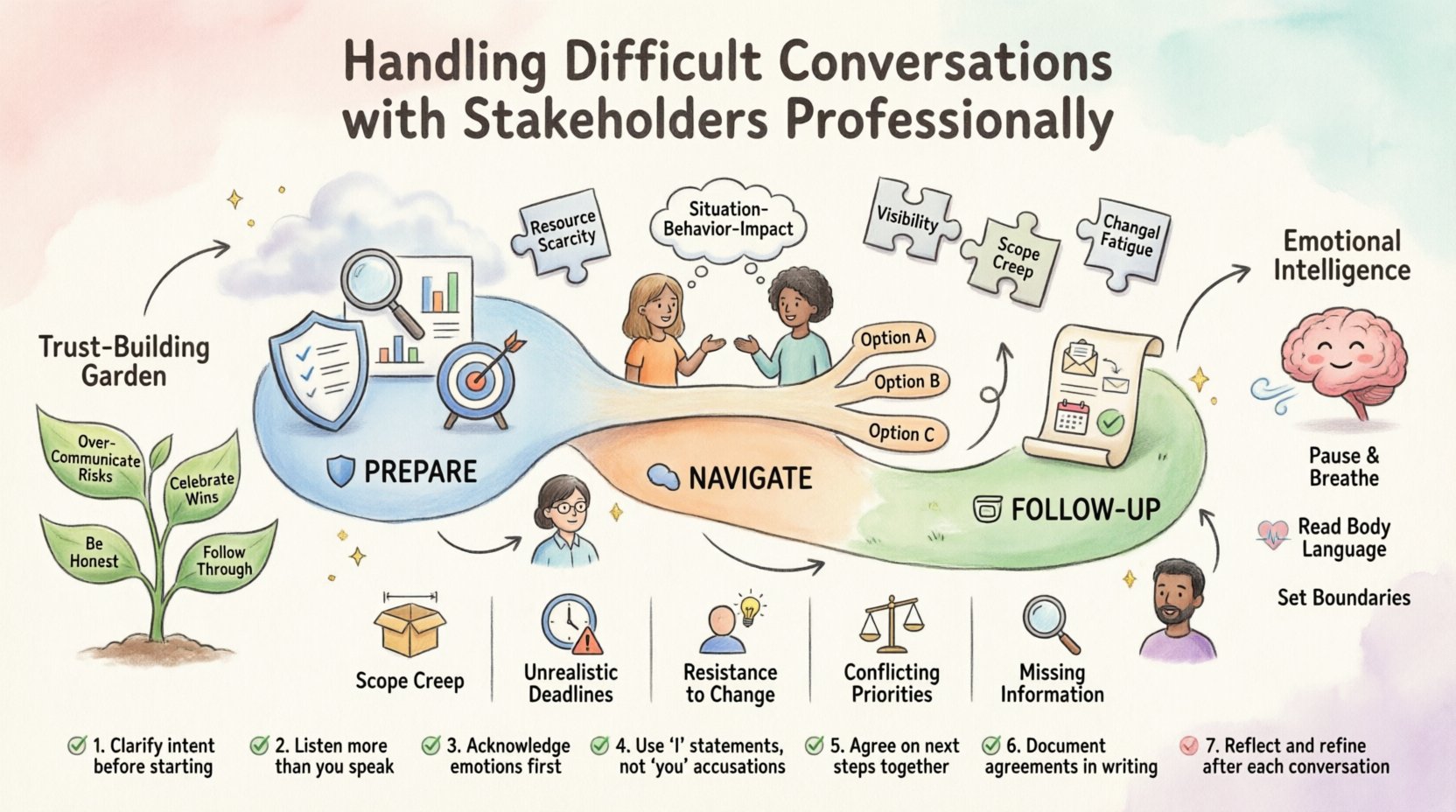
Understanding the Dynamics of Stakeholder Conflict 🧩
Before entering a difficult conversation, one must understand the source of the tension. Conflict rarely arises from malice. It usually stems from misaligned incentives, lack of information, or fear of the unknown. Stakeholders operate from their own organizational pressures. A marketing director might prioritize speed to market, while a compliance officer prioritizes risk mitigation. Both are valid, but they create friction.
Identifying the root cause of resistance allows you to address the actual issue rather than the symptom. Common drivers of difficult conversations include:
- Resource Scarcity: The stakeholder believes the project is consuming too many company resources compared to other initiatives.
- Visibility: The stakeholder feels excluded from the process or uninformed about progress.
- Scope Creep: The stakeholder has added requirements informally, leading to timeline slippage that was not communicated.
- Change Fatigue: The team or stakeholder group is overwhelmed by the frequency of changes and new initiatives.
- Personal Bias: Past experiences with the project team or organization influence current perceptions.
Recognizing these triggers helps frame the conversation objectively. It shifts the dialogue from “you are wrong” to “we have different constraints to balance.” This distinction is vital for maintaining a professional relationship.
Preparation: The Foundation of Confidence 🛡️
Walking into a high-stakes meeting without preparation is a gamble few projects can afford. Preparation serves two purposes: it clarifies your position and it reduces anxiety. When you know your data, your options, and your goals, you project quiet confidence.
1. Gather Objective Data
Emotions run high during conflicts. Data grounds the discussion in reality. Before the meeting, collect the following:
- Current project status reports highlighting specific variances.
- Historical data on similar initiatives to benchmark performance.
- Documentation of all communication regarding scope changes.
- Resource allocation logs showing team capacity.
These artifacts are not weapons to attack the stakeholder. They are tools to illustrate the reality of the situation. If a stakeholder claims a deadline is unrealistic, you present the dependency map showing why that date was chosen.
2. Define Your Objectives
What do you need from this conversation? Is it approval? Understanding? Or simply to document the risk? Define a primary goal and a secondary goal. For example:
- Primary Goal: Secure agreement to adjust the delivery date by two weeks.
- Secondary Goal: Ensure the stakeholder understands the impact on the budget if the date remains unchanged.
Having these written down keeps you on track if the conversation becomes emotional or veers off-topic.
3. Anticipate Objections
Play devil’s advocate. If you were the stakeholder, what would you ask? What would you complain about? List the top five potential objections and prepare a neutral response for each. This rehearsal prevents you from being caught off guard.
Navigating the Conversation: Tactics and Techniques 🤝
Once the meeting begins, the structure of the dialogue matters. A chaotic conversation leads to unresolved issues. A structured conversation leads to decisions.
1. Establish Psychological Safety
Begin by acknowledging the importance of the stakeholder’s role. Validate their concerns before presenting your data. Phrases like “I understand why this timeline impacts your launch” or “Your feedback on the budget is crucial” signal that you are listening, not just waiting to speak. This lowers defensive barriers.
2. Use the “Situation-Behavior-Impact” Model
When addressing problematic behavior or expectations, use a neutral framework. This prevents the conversation from feeling like a personal attack.
- Situation: State the context. “In last week’s review meeting…”
- Behavior: Describe the observable action. “…the requirement for the reporting module was changed without a formal request…”
- Impact: Explain the consequence. “…this has delayed the testing phase by three days…”
This method focuses on facts and outcomes rather than intent.
3. Listen Actively and Validate
Stakeholders often speak until they feel heard. Allow them to finish their thoughts. Take notes visibly. Paraphrase their points to ensure understanding. “So, what you are saying is that the budget cannot accommodate the new features until Q4. Is that correct?” This confirms you are aligned and prevents future misunderstandings.
4. Offer Choices, Not Ultimatums
Never present a single path if alternatives exist. If a deadline cannot be met, offer options:
- Option A: Meet the deadline, but reduce the scope.
- Option B: Keep the full scope, but extend the deadline.
- Option C: Keep the deadline and scope, but add resources to the team.
This shifts the stakeholder from being an obstacle to being a decision-maker. It shares the burden of the trade-off.
Post-Conversation Alignment 📝
The conversation does not end when the meeting adjourns. The follow-up is where accountability is established. Without documentation, memories fade and agreements change.
- Send a Summary Email: Within 24 hours, send a brief recap of the discussion. List the decisions made, the risks acknowledged, and the action items assigned to specific individuals.
- Update Project Plans: Adjust timelines, budgets, or scope documentation to reflect the new agreement. Ensure the project repository is accurate.
- Confirm in Writing: Ask the stakeholder to reply confirming the summary. This creates a paper trail for future reference.
This step protects the project manager and the team. It ensures that if the scope changes again, there is a record of the original agreement.
Scenario Matrix: Approaching Common Challenges 📊
Different situations require different approaches. The following table outlines strategies for common stakeholder friction points.
| Scenario | Root Cause | Recommended Approach |
|---|---|---|
| Scope Creep | Desire for more value without understanding cost. | Present the impact on timeline and budget. Request a formal change order. Emphasize the value of finishing current work first. |
| Unrealistic Deadlines | External pressure from upper management. | Provide data on historical velocity. Offer phased delivery to meet the urgent need while deferring less critical features. |
| Resistance to Change | Fear of new processes or tools. | Highlight training support. Show quick wins. Involve the stakeholder in the design of the new process to increase ownership. |
| Conflicting Priorities | Multiple projects competing for resources. | Escalate to the steering committee. Present a prioritization matrix based on business value and strategic alignment. |
| Missing Information | Lack of transparency from the team. | Implement a standardized reporting cadence. Schedule regular check-ins. Make data visible to all parties. |
Emotional Intelligence and Personal Resilience 🧠
Even with the best preparation, stakeholders can become emotional. A project manager must remain steady. Emotional intelligence involves regulating your own reactions and reading the room.
1. Manage Your Triggers
Some comments may feel personal or unfair. Pause before responding. Take a breath. Ask yourself, “Is this an attack on me, or a concern about the project?” Keeping the focus on the project protects your professional reputation.
2. Read Non-Verbal Cues
Pay attention to body language. Crossed arms, lack of eye contact, or silence can indicate discomfort or disagreement. Address these directly. “I notice some hesitation. Is there something you would like to add?” This invites participation from quiet stakeholders.
3. Know When to Escalate
Not all conflicts can be resolved at the project level. If a stakeholder is consistently obstructive or if the risk to the project exceeds your authority, escalate to senior leadership. This is not a failure; it is risk management. Document the issue and the impact on the business before escalating.
4. Maintain Boundaries
Professionalism includes setting boundaries. If a stakeholder contacts you outside of agreed hours or demands immediate responses that disrupt the team, communicate your availability clearly. “I can discuss this during our scheduled review on Tuesday.” This protects team morale and ensures sustainable work practices.
Building Long-Term Trust Through Consistency 🤝
One difficult conversation is an event; consistent communication is a strategy. Trust is built over time by delivering on promises and being transparent about setbacks.
- Over-Communicate Risks: Bad news travels fast. If a risk becomes real, inform stakeholders immediately. Do not wait for the deadline to pass.
- Celebrate Wins: Share credit with the stakeholders. Acknowledge their support when milestones are met.
- Be Honest About Gaps: If the team lacks a skill or resource, admit it. Do not promise what cannot be delivered.
- Follow Through: If you say you will send a document, send it. If you say you will check a status, check it. Reliability creates a baseline of trust.
When stakeholders trust you, they are more forgiving when things go wrong. They understand that you are managing complexity, not hiding errors. This trust is the most valuable currency in project management.
Reflection and Continuous Improvement 🔍
After a difficult conversation, take time to reflect. What went well? What could have been handled better? Did you stay calm? Did you achieve the goal? Review the outcome against your objectives.
Consider keeping a personal log of challenging interactions. Note the tactics used and the results. Over time, patterns will emerge. You may notice that certain stakeholders respond better to data, while others prefer a high-level summary. Adapting your style to the individual stakeholder improves future outcomes.
Summary of Best Practices ✅
- Prepare thoroughly with data and defined objectives.
- Focus on the problem, not the person.
- Validate stakeholder concerns before proposing solutions.
- Document all agreements and send written summaries.
- Maintain emotional stability during high-pressure moments.
- Use trade-off options to facilitate decision-making.
- Build trust through consistent transparency and reliability.
Managing difficult conversations is not about winning an argument. It is about steering the project toward success while preserving the relationship. By applying these structured approaches, project managers can navigate friction with confidence and clarity. The goal is a project that delivers value and a team that remains engaged and supported.