
UML Use Case Diagram: Architecting the Online Therapy Platform
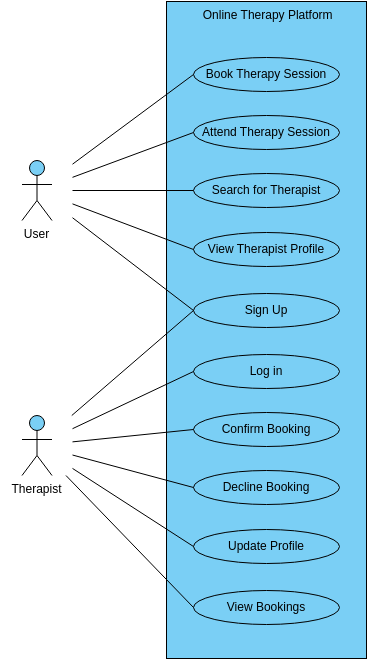
In the realm of software engineering, understanding how different actors interact with a system is crucial for defining requirements effectively. An Online Therapy Platform is a complex software application designed to bridge the gap between mental health professionals and individuals seeking support. To ensure the system is built to meet user needs, we utilize a Use Case Diagram. This diagram serves as a visual blueprint, mapping out the functional requirements and the specific roles of the system’s users.
This tutorial will guide you through the architecture of an Online Therapy Platform, analyzing the key actors, the specific use cases they perform, and the strategic value of modeling these interactions using UML (Unified Modeling Language).
Understanding the Actors and Boundaries
Before diving into the specific functionalities, we must define the scope of the system and the entities interacting with it. In our diagram, the system is encapsulated within a blue boundary labeled Online Therapy Platform. This boundary clearly delineates what is “inside” the software (the features) and what is “outside” (the users).
There are two primary Actors represented by stick figures:
- The User: The individual seeking mental health services. Their goal is to find a therapist, book a session, and attend remotely.
- The Therapist: The licensed professional providing the service. Their goal is to manage their schedule, view bookings, and update their professional profile.
Breakdown of User Use Cases
The User interacts with the system through several distinct use cases that facilitate the therapy journey:
1. Search for Therapist
Before booking, a user must find a suitable match. This use case allows users to filter potential therapists based on criteria such as specialization, location, availability, and reviews. This is a critical feature for ensuring a good therapeutic fit.
2. View Therapist Profile
Once a therapist is identified, the user can access detailed information. This includes qualifications, experience, and past client feedback. This transparency is essential for informed decision-making.
3. Book Therapy Session
This is the core transaction of the platform. The user selects a date and time and confirms the appointment. The system must handle this interaction securely, providing immediate confirmation and instructions.
4. Attend Therapy Session
Once booked, the user utilizes the platform to join the session. This use case implies the integration of a secure video conferencing interface, allowing for real-time communication.
5. View Bookings
To manage their mental health journey, users need to see their history and upcoming appointments. This feature allows them to view past sessions and manage future ones.
Breakdown of Therapist Use Cases
The Therapist has a different set of responsibilities, focused on the management of their practice and client interactions:
1. Sign Up & Log in
Therapists must securely register on the platform to access the provider dashboard and authenticate themselves for daily use.
2. Confirm Booking
When a user requests a session, the therapist must acknowledge it. This use case ensures that appointments are validated from the provider’s side.
3. Decline Booking
Flexibility is key in healthcare. Therapists must have the ability to decline bookings due to scheduling conflicts or other professional reasons.
4. Update Profile
Therapists need to keep their public-facing information current, including their qualifications and availability settings.
5. View Bookings
Similar to the user, the therapist needs to view their calendar to manage their workload and ensure they are prepared for upcoming sessions.
Why Use Case Diagrams Matter
Creating a use case diagram for this platform is not just about drawing ovals and lines; it is a strategic exercise in system design. By visualizing these interactions, developers can:
- Identify Gaps: It becomes easier to spot missing features, such as a “Cancel Booking” function that might be necessary for users.
- Clarify Requirements: It defines exactly what the system should do (the “what”) without getting bogged down in the technical implementation details (the “how”).
- Ensure Scalability: By understanding the dependencies between the User and Therapist roles, the system can be designed to handle increased load and new features in the future.
Conclusion
The Online Therapy Platform Use Case Diagram provides a comprehensive overview of the system’s functional scope. It clearly separates the needs of the User and the Therapist while highlighting the shared need for effective booking management. This model serves as a foundational blueprint for the development team, ensuring that the final product is intuitive, user-friendly, and capable of delivering high-quality mental health services remotely.