Skip to content
Method Post | Your Daily Guide to AI & Software Solutions Method Post | Your Daily Guide to AI & Software Solutions
  • Home

UML

Home » UML » Page 3
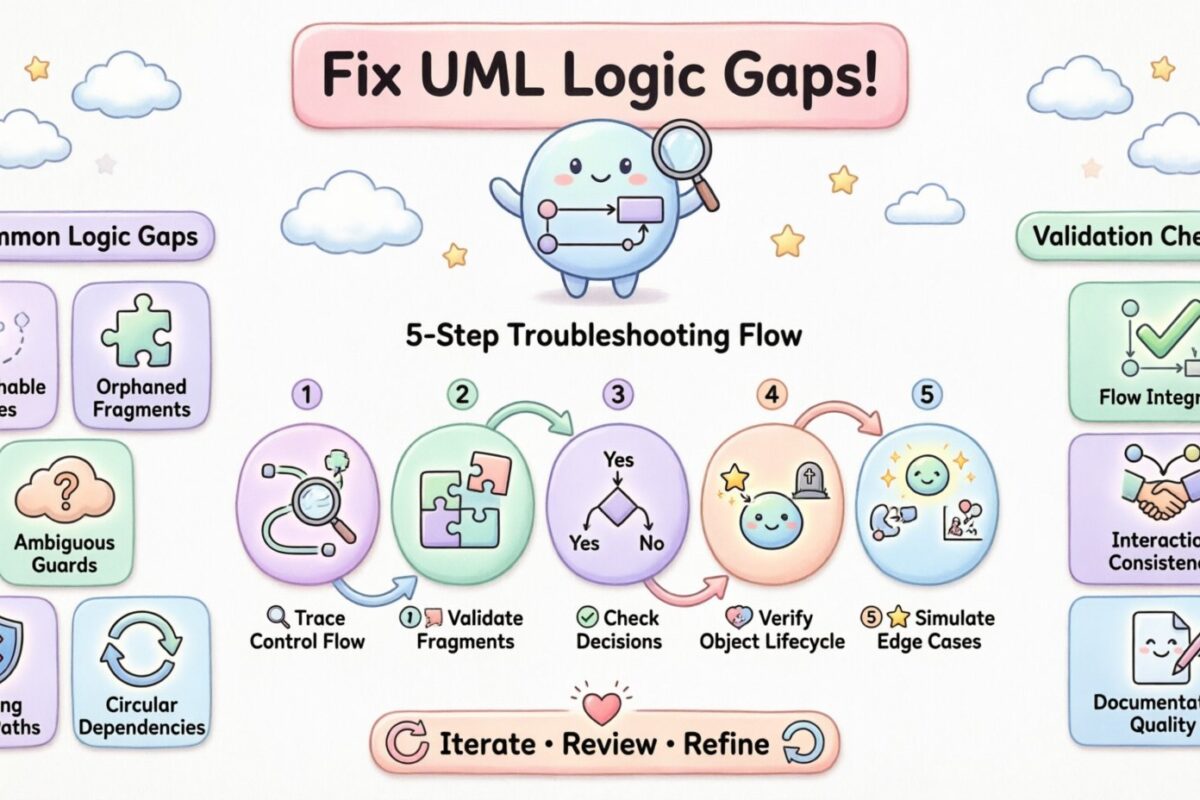
Troubleshooting Your UML Interaction Overview Diagram: Fixing Logic Gaps Before They Cause Confusion
Posted inUML

Troubleshooting Your UML Interaction Overview Diagram: Fixing Logic Gaps Before They Cause Confusion

Designing complex systems requires clear communication. The Unified Modeling Language (UML) provides a standardized way to visualize system behavior. Among its various diagram types, the Interaction Overview Diagram stands out…
Best Practices for Creating Clear and Actionable UML Interaction Overview Diagrams in 2024
Posted inUML

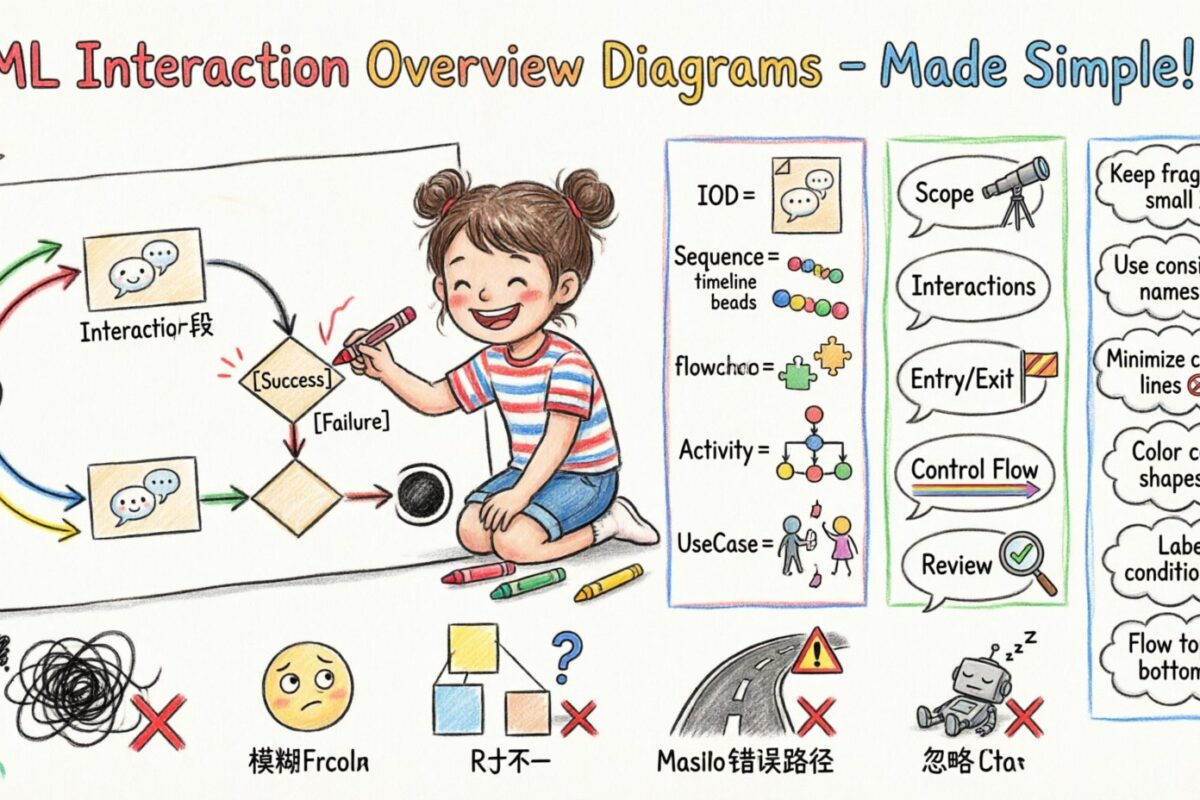
Best Practices for Creating Clear and Actionable UML Interaction Overview Diagrams in 2024

System design is the backbone of reliable software engineering. Among the various modeling tools available, the UML Interaction Overview Diagram stands out for its ability to map complex workflows without…
UML Interaction Overview Diagrams vs. Sequence Diagrams: A Clear Comparison for Requirements Engineers
Posted inUML

UML Interaction Overview Diagrams vs. Sequence Diagrams: A Clear Comparison for Requirements Engineers

Modeling complex systems requires precision. In the field of Requirements Engineering, the choice of notation directly impacts clarity, traceability, and implementation accuracy. Two of the most prevalent behavioral modeling techniques…
UML Interaction Overview Diagram: A Beginner’s Quick Start Guide to Visualizing Dynamic Workflows
Posted inUML

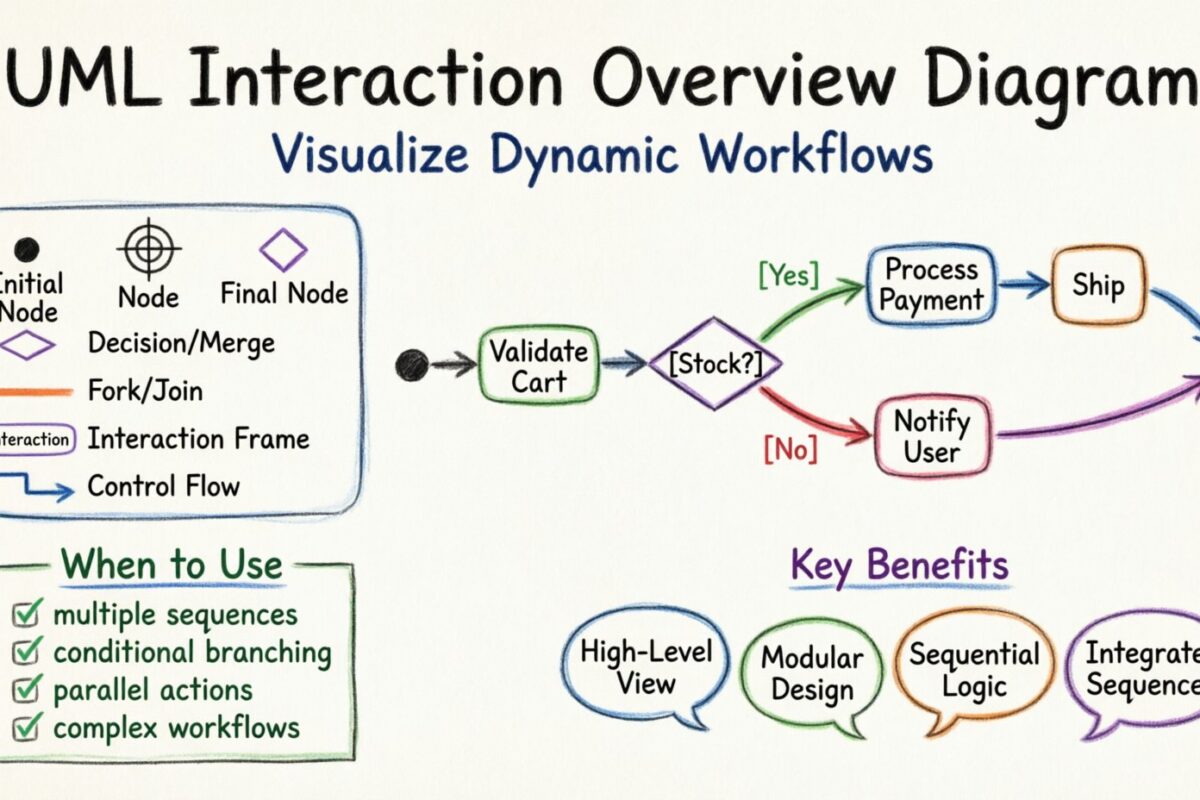
UML Interaction Overview Diagram: A Beginner’s Quick Start Guide to Visualizing Dynamic Workflows

Understanding how software components communicate over time is critical for robust system design. While static diagrams show structure, dynamic diagrams show behavior. Among the interaction diagrams in Unified Modeling Language…
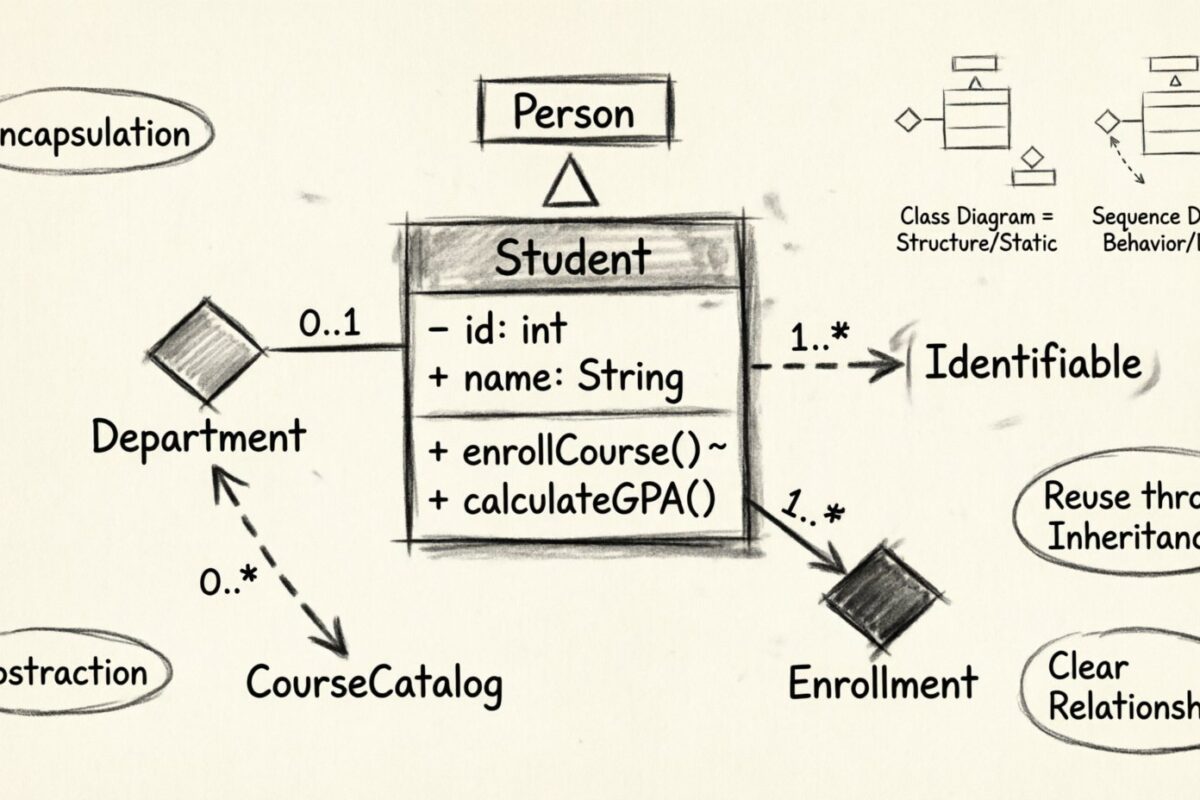
Step-by-Step Class Diagram Tutorial: From Blank Page to Final Model in 15 Minutes
Posted inUML

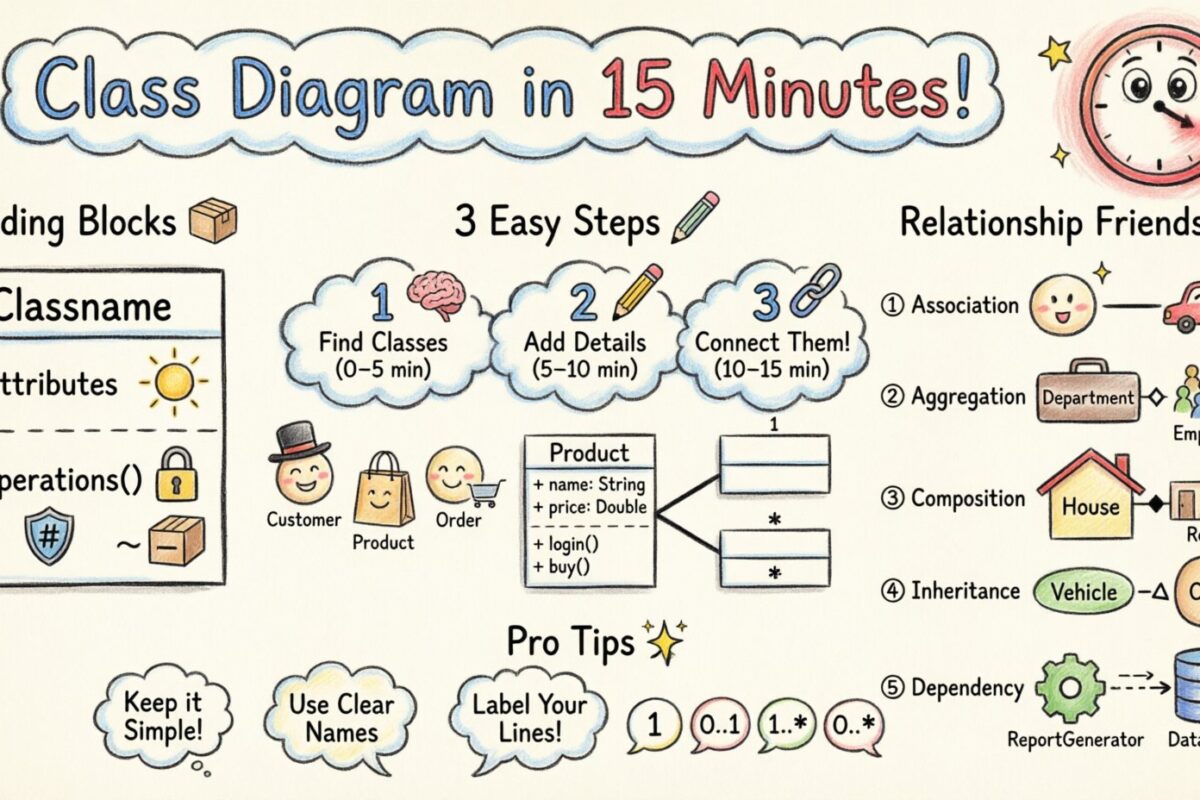
Step-by-Step Class Diagram Tutorial: From Blank Page to Final Model in 15 Minutes

Designing software architecture begins before writing a single line of code. It starts with understanding how data and behavior interact within your system. A Class Diagram serves as the blueprint…
Visualizing Data Flow: Using Class Diagrams to Map Your Application’s Core Structure
Posted inUML

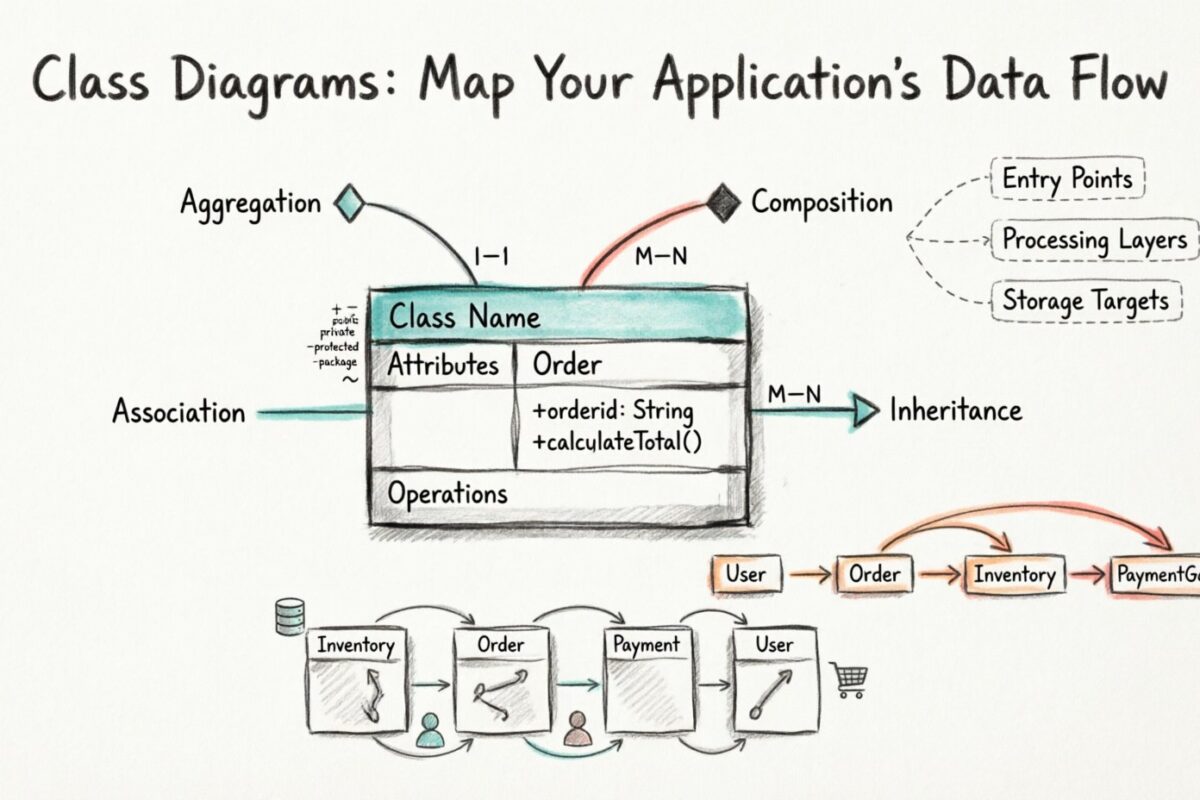
Visualizing Data Flow: Using Class Diagrams to Map Your Application’s Core Structure

Software systems grow complex over time. What begins as a simple script expands into a network of interacting components. Without a clear map, developers often find themselves navigating a labyrinth…
Error Analysis: Why Your Database Schema Might Not Match Your Class Diagram
Posted inUML

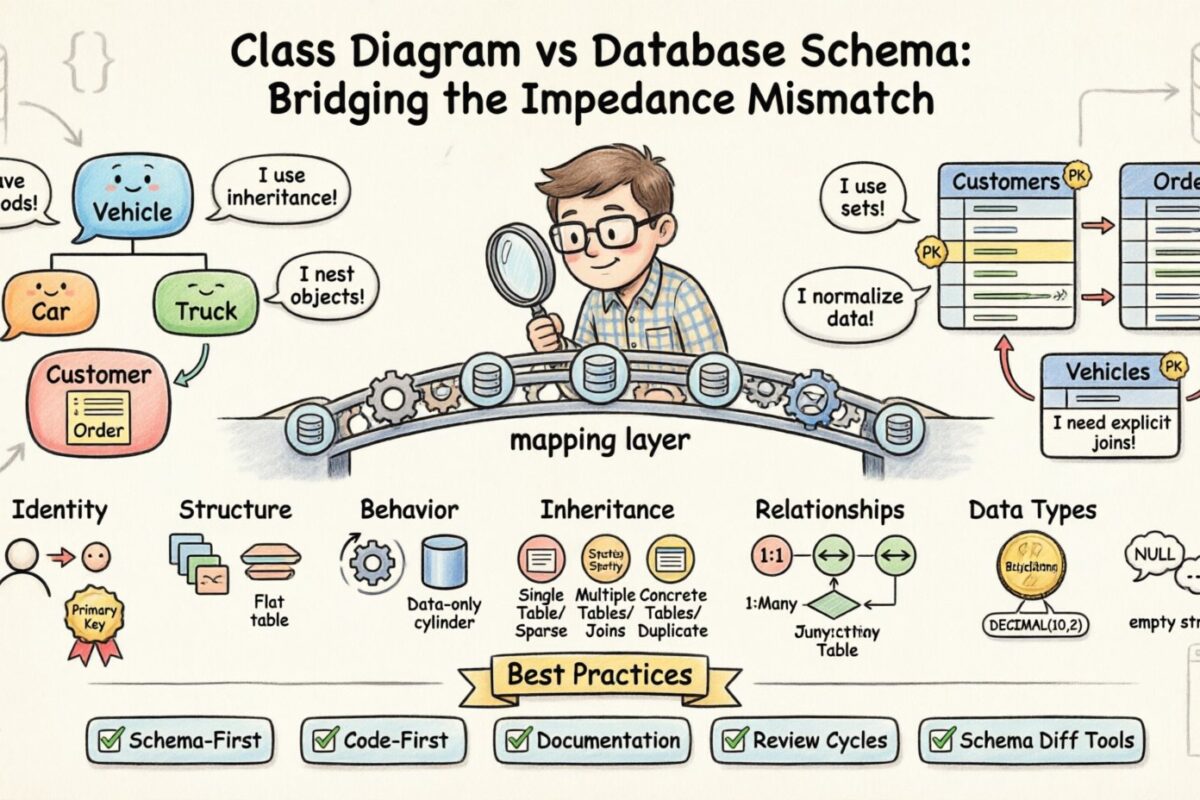
Error Analysis: Why Your Database Schema Might Not Match Your Class Diagram

In modern software architecture, the disconnect between the object-oriented model used in application code and the relational model used in persistent storage is a persistent challenge. Developers frequently encounter situations…
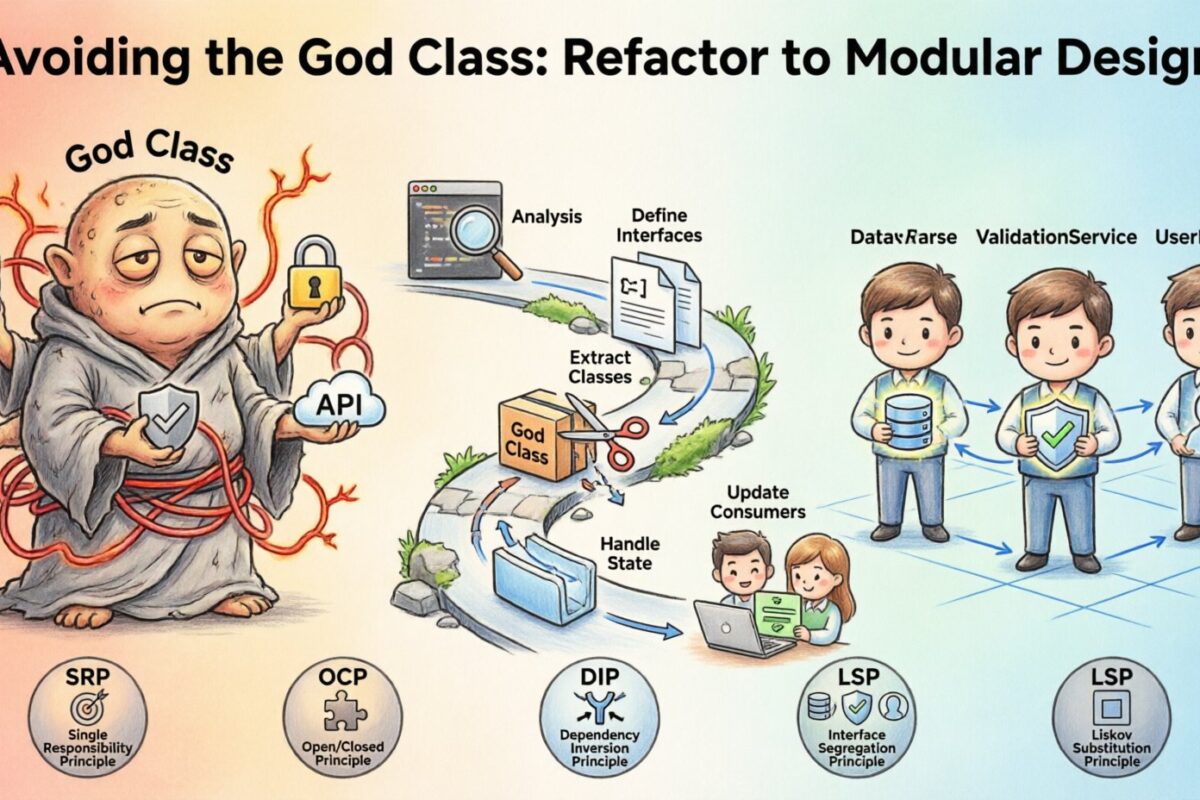
Avoiding the “God Class”: How to Refactor Large Diagrams into Manageable Modules
Posted inUML

Avoiding the “God Class”: How to Refactor Large Diagrams into Manageable Modules

In software architecture, few patterns are as detrimental to long-term maintainability as the God Class. This anti-pattern occurs when a single class becomes responsible for a vast array of responsibilities,…
Q&A: Answering Top 20 Student Questions About Class Diagrams and Their Role in Software Engineering
Posted inUML

Q&A: Answering Top 20 Student Questions About Class Diagrams and Their Role in Software Engineering

Software engineering relies heavily on visual models to communicate complex system structures. Among the Unified Modeling Language (UML) standards, the class diagram stands out as a fundamental tool for object-oriented…
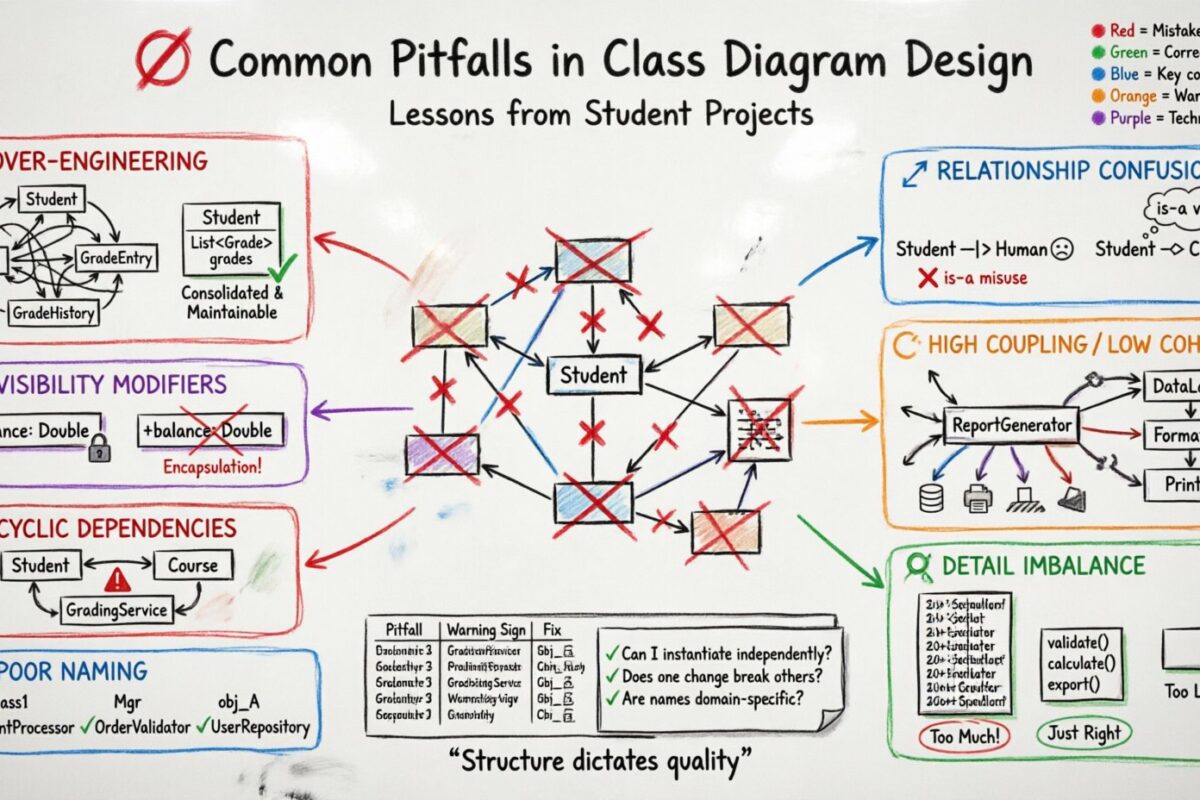
Common Pitfalls in Class Diagram Design: Lessons from Real Student Projects
Posted inUML

Common Pitfalls in Class Diagram Design: Lessons from Real Student Projects

Class diagrams serve as the backbone of object-oriented software design. They translate abstract requirements into concrete structures, defining how objects interact, what data they hold, and how they behave. In…

Posts pagination

Previous page 1 2 3 4 5 … 11 Next page
Language
No available translations found

Categories

  • AI
  • AI Chatbot
  • AI Visual Modeling
  • Animated Video Maker
  • ArchiMate
  • BPMN
  • C4 Model
  • Cloud Architecture Diagram
  • Content & Visual
  • Customer Journey Mapping
  • Database Design
  • DFD
  • Flipbook Tool
  • Flowchart
  • OpenDocs
  • Project Management
  • Strategic Analysis
  • SysML
  • TOGAF
  • UML
  • Uncategorized
  • User Story
  • Visual Paradigm
  • VPasCode

Recent Posts

  • How to Use AI to Instantly Generate and Troubleshoot Diagram as Code Syntax
  • Review: Streamlining Agile Workflows with Visual Paradigm’s AI Chatbot and VPasCode
  • From Concept to Compliance: A Product Manager’s Review of Modernizing Loan Origination with Visual Paradigm
  • UML Modeling in Agile Development: The AI and Diagram-as-Code Revolution
  • AI-Powered UML: Supercharging Agile Modeling in the Age of Intelligent Design

Archives

  • July 2026
  • June 2026
  • May 2026
  • April 2026
  • March 2026
  • February 2026
  • January 2026
  • December 2025
  • October 2025
  • September 2025
  • March 2025
  • February 2025
Copyright 2026 — Method Post | Your Daily Guide to AI & Software Solutions. All rights reserved.
Scroll to Top